


NEWYou can now listen to Fox News articles!
Wreckage was found from a Pan Am flight that ditched in the ocean off Puerto Rico in 1952, a crash that killed 52 people and helped lead to mandatory passenger safety briefings on commercial flights.
Searchers recently found the wreckage of the DC-4 by using an autonomous underwater vehicle equipped with high-resolution sonar to locate the fuselage and separated tail in nearly 2,000 feet of water.
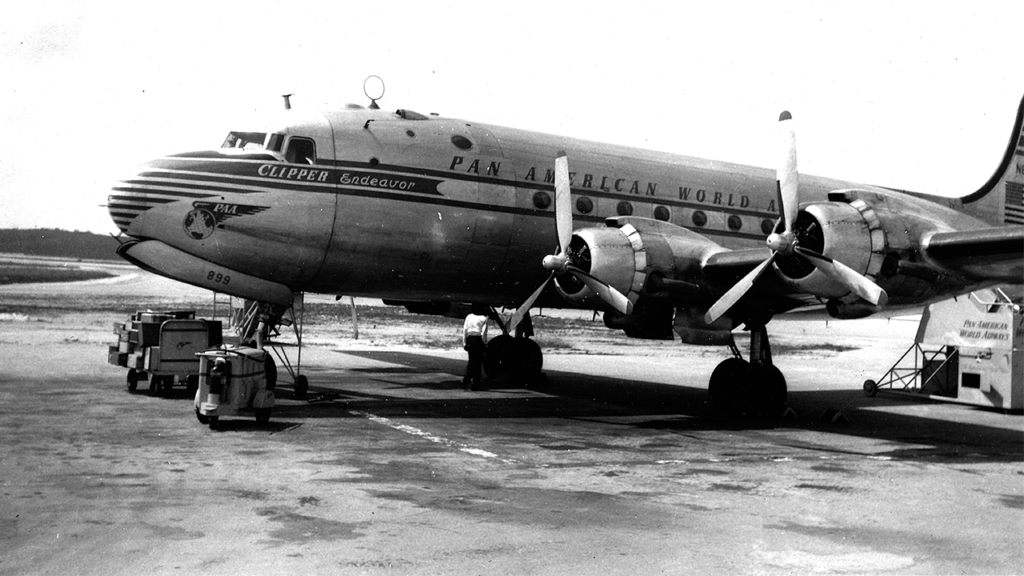
The Clipper Endeavor aircraft made a hard landing in the ocean after losing engine power shortly after departure from San Juan, Puerto Rico, en route to New York City.
The 17 passengers and crew who lived told investigators everyone survived the landing, but many passengers struggled to locate life vests and the crew had a difficult time pulling out life rafts. The plane sank within minutes.
FLIGHT ATTENDANTS BEG TRAVELERS TO STOP DOING THE ONE THING THAT ANNOYS CREWS MOST

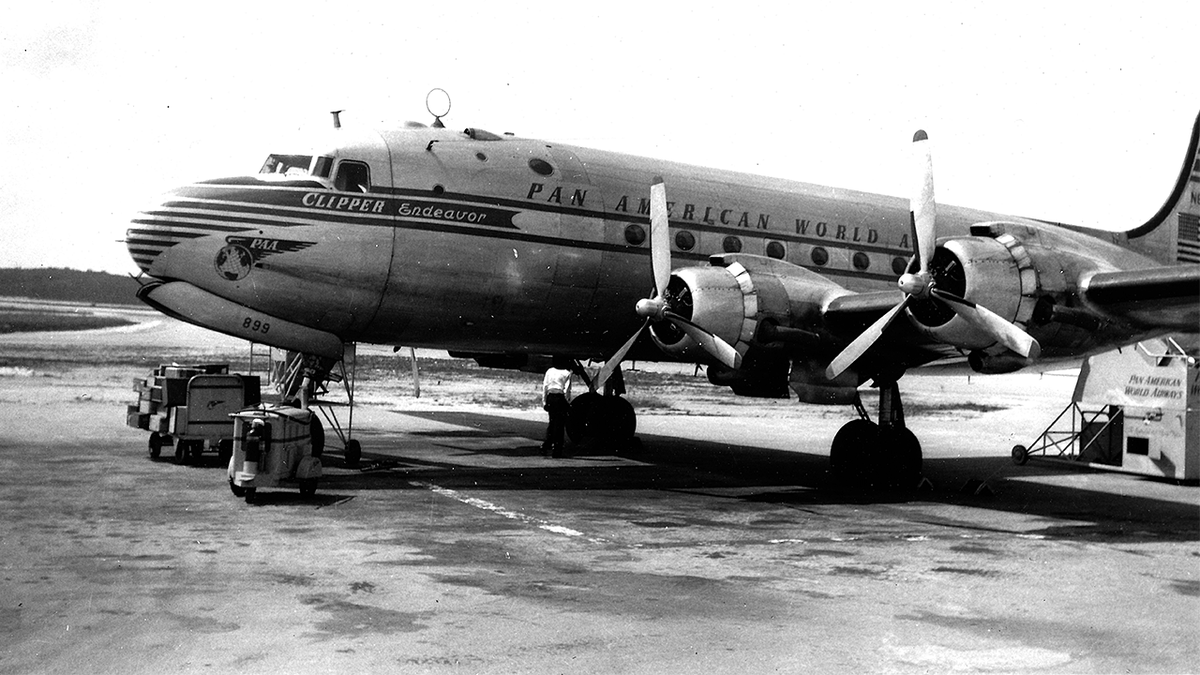
The Clipper Endeavor aircraft made a hard landing in the ocean after losing engine power shortly after departure from San Juan, Puerto Rico, en route to New York City. (Pan Am Historical Foundation via AP)
The Civil Aeronautics Board attributed the accident to inadequate maintenance that contributed to the engine failure and to the captain’s handling of the aircraft after power was lost.
The panic from the occupants struggling to grab floatation devices helped spur aviation-safety reforms, including mandatory preflight passenger briefings and improvements involving flotation equipment.
The crash first drew the attention of Air/Sea Heritage Foundation President Russ Matthews in 2019 when he heard about a luggage tag from the flight washing ashore in Florida and began to dig deeper.
This led to years of combing through the Pan Am and Coast Guard archives in search of clues about the location of the plane’s wreckage. Reports from the Civil Aeronautics Board, which preceded the Federal Aviation Administration, also aided the search.
TRAVELERS REVISIT GOLDEN AGE OF FLYING AS NOSTALGIC COLLECTIBLES MAKE MAJOR COMEBACK
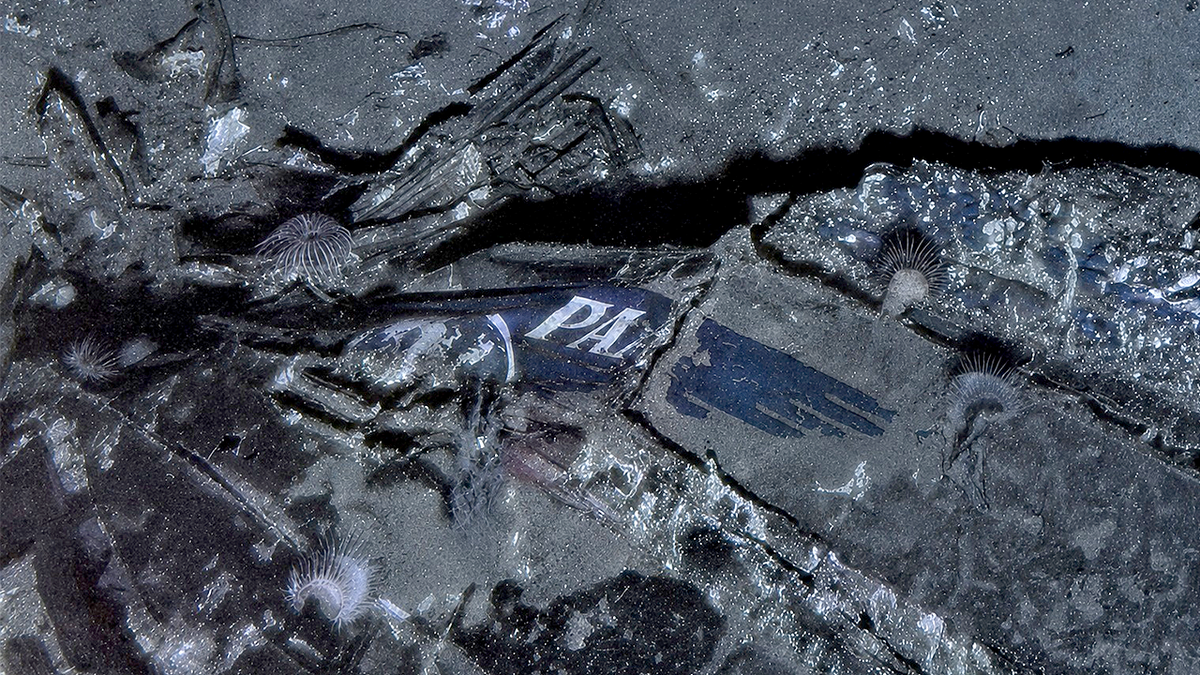
A Pan American World Airways logo on the nose section of the Clipper Endeavor wreck. (Air/Sea Heritage Foundation and Deep Sea Vision via AP)
However, the key to the wreckage discovery was found in records in Puerto Rico from a hearing held on the crash and a map estimating the site of the crash that was made by Air Force pilots who witnessed the accident because they were in the area on a training flight.
Bad weather disrupted a previous attempt two years ago to find the wreckage with a towed sonar array. Matthews said he and his volunteers wanted a second attempt to locate it before next year’s 75th anniversary of the crash with a newer advanced drone that was originally created for military uses such as finding undersea mines.
Tony Romeo, the CEO of the undersea exploration firm Deep Sea Vision, had been speaking to Matthews for some time about the possibility of helping to find the aircraft if one of his ships was ever in the area. Then in April, one of the company’s ships was passing Puerto Rico between two other jobs while carrying an advanced underwater drone with the right sensors to find the plane.
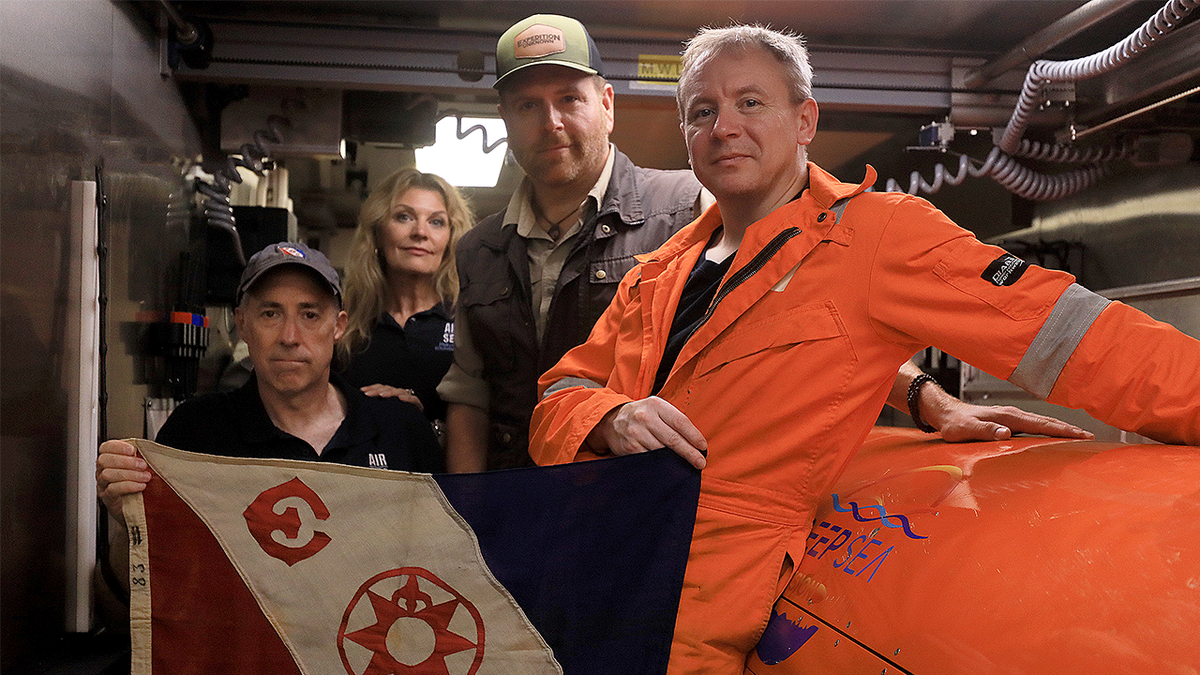
Air/Sea Heritage Foundation (ASHF) President Russ Matthews, ASHF Director Idee Matthews-Montijo, Expedition Unknown’s Josh Gates and Deep Sea Vision President of Operations Craig Wallace inside an AUV hangar with an Explorers Club flag. (Discovery Channel via AP)
CLICK HERE TO DOWNLOAD THE FOX NEWS APP
“There we were, and everything kind of came together at the moment: good weather, the right team, and the right equipment and ship. So we took a shot at it,” said Romeo, whose father was a mechanic and pilot for Pan Am.
Deep Sea Vision previously led an unsuccessful six-month mission in search of Amelia Earhart’s plane.
All the research Matthews’ group had conducted, along with weather data from the time of the crash, was synthesized to develop a map of the most likely location and a search area of 10 square nautical miles. The drone located the wreckage on its first pass over that area, but searchers were unaware until it returned to the surface with images.
The Associated Press contributed to this report.