


New research suggests that people with obesity who take GLP-1 drugs appear to scale back on physical activity once they start taking the drug.


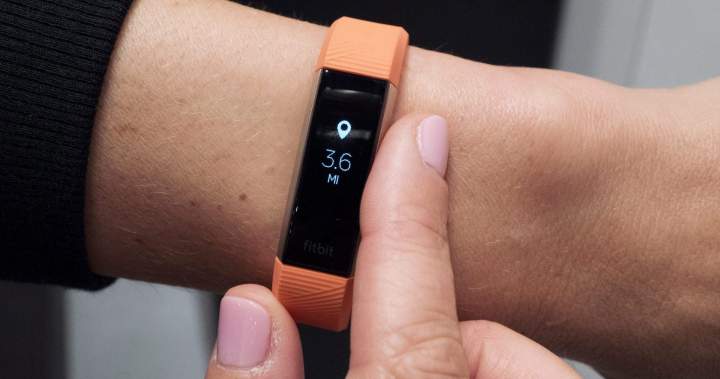
A study presented on June 14 at ENDO 2026, the Endocrine Society’s annual meeting in Chicago, had researchers use data from the National Institutes of Health’s All of Us Research Program, which links participants’ electronic health records with their Fitbit activity data.
Researchers then evaluated daily step counts for 753 people with obesity before and after they began taking a GLP-1.
The participants’ daily steps decreased from about 5,047 to 4,487 per day, the study said.
Moderate-to-vigorous physical activity also dropped, from 28 minutes a day to 22 minutes a day, according to a release from the Endocrine Society.
The decline was also not evenly spread, as the largest drops were seen in men and people living with joint or muscle pain. By contrast, factors such as age, heart failure or a prior stroke did not change the results, suggesting the pattern held across a fairly broad range of circumstances.
The average age of participants was 52.7 years, and 78.6 per cent were women.
Additionally, there was no evidence found that “weight loss from these medications led to increased physical activity.”


Get weekly health news
Receive the latest medical news and health information delivered to you every Sunday.
“This is the first large study analyzing data from wearable fitness trackers among adults taking GLP-1 receptor agonists,” the release reads.
Study lead Dr. Sajana Maharjan also states in the press release that “while many assume that weight loss leads naturally to increased physical activity, our study suggests otherwise.”
“The findings in our study reinforce that exercise cannot be optional for people taking these medications. People need targeted interventions that encourage physical activity alongside medication for obesity,” Maharjan said.
GLP-1 drugs ‘are not a magic bullet’
Dr. Hertzel Gerstein, a professor in the medicine department at McMaster University and a diabetes physician, stated that there are “many possible explanations for this.”
“Only one of these is that the drug was responsible for this reduction,” he said in an emailed statement to Global News. “People on these drugs should maintain and if possible, try to increase physical activity to maintain muscle mass and health.
“This is always good advice (assuming there is no medical reason to preclude it), and important when any weight loss is being planned. This is because weight loss for any reason does cause muscle loss since you need less muscle to move less weight around.”
Dr. Dana Small, a neurology and neurosurgery professor at McGill University, said GLP-1 drugs “are not a magic bullet.”
“There could be multiple reasons why people are moving less, with people may be thinking, ‘OK, the drug will do all the work, I don’t have to [exercise],’ it’s certainly a possibility and a likely contributor,” she said. “When people do go off of it, even if it was effective, weight gain is more rapid than with other weight loss measures. And that can have some negative effects.
“It is absolutely the case that when you lose weight, you lose fat mass, but also lean mass, muscle mass. So, if you’re stopping exercising and then you’re rapidly regaining weight, you’re going to regain weight, but most of that will be fat mass, not lean mass, especially if you are not exercising and even more problematic if you’ve lost muscle mass because you’re exercising less.”
The study’s findings come as GLP-1 drugs continue to become more widely available, with several generic versions becoming available at Canadian pharmacies.
© 2026 Global News, a division of Corus Entertainment Inc.