


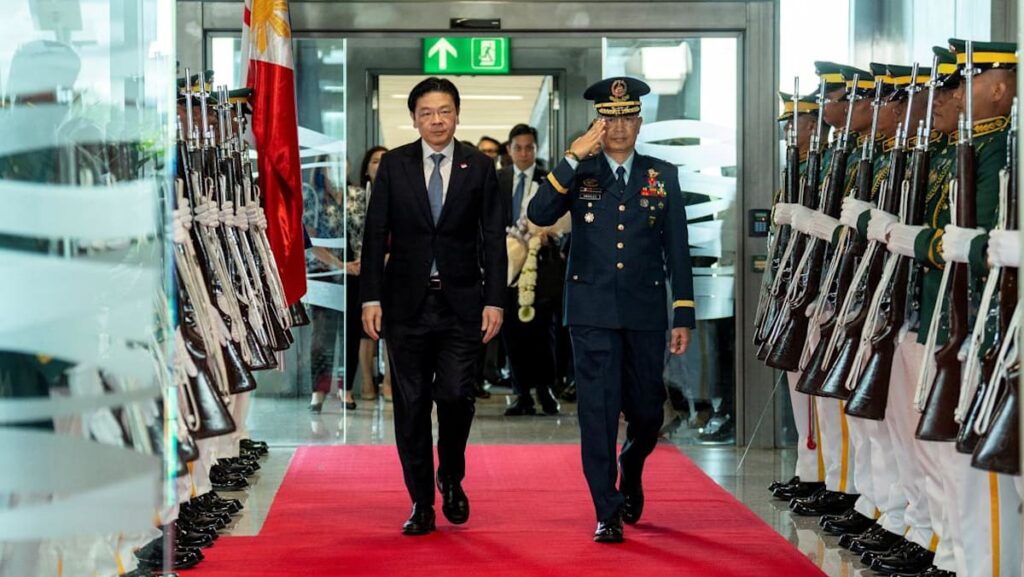
CEBU, Philippines: The Association of South-east Asian Nations (ASEAN) must reinforce its collective energy security and strengthen supply chains to prepare for a world with more disruptions and shocks, said Singapore Prime Minister Lawrence Wong on Friday (May 8).
Speaking at the plenary session of the 48th ASEAN Summit, Mr Wong said the ongoing conflict in the Middle East has affected all member states.
“Amidst this crisis, we must uphold ASEAN solidarity,” he said.
Mr Wong called for the swift ratification of the ASEAN Petroleum Security Agreement, last renewed in 2025, saying this would give the region more tools to respond to energy crises. The agreement allows member states to support each other’s oil and gas needs during supply disruptions.
He also called for the accelerated realisation of the ASEAN power grid, a plan to connect the electricity networks of its member countries, which would allow states to trade surplus electricity and share reserve capacities.
“This will certainly help build stronger resilience against future supply disruptions and external shocks, while powering our region’s growth in a more sustainable manner,” he said.
On supply chains, Mr Wong said intra-ASEAN networks, especially for critical goods like food, needed to be strengthened.
Noting that ASEAN accounts for almost 10 per cent of global agricultural exports, he said the region should tap its strengths to better meet its people’s needs.
He called for the swift ratification of the upgraded ASEAN Trade in Goods Agreement, which was signed in October 2025, so that it can come into effect ideally within the year.
The agreement includes crisis provisions and commitments on trade in essential goods, and reduces non-tariff barriers to food trade while encouraging the exchange of food safety information.
Asia will be the hardest hit by the Middle East crisis because of its high dependence on energy and other critical supplies from the Gulf, Mr Wong said, adding that ASEAN must double down on integration to bolster its collective resilience.
“We all hope the crisis will end soon, but we have to be mentally prepared that the impact will be with us for some time,” he said.
Even if the Strait of Hormuz were opened tomorrow, it would take at least months for damaged infrastructure to be repaired and for goods to flow again, Mr Wong added.
Mr Wong also welcomed the Cebu Protocol, the first-ever amendment to the ASEAN Charter, which reflects Timor-Leste’s membership. Singapore supports Timor-Leste’s ASEAN chairmanship in 2029, he said.
On the sidelines of the summit, Mr Wong met Malaysian Prime Minister Anwar Ibrahim and Cambodian Prime Minister Hun Manet separately on Thursday. With Mr Anwar, he discussed the Middle East conflict and ASEAN’s role, and also touched on the RTS Link project, expected to be operational by end-2026.