


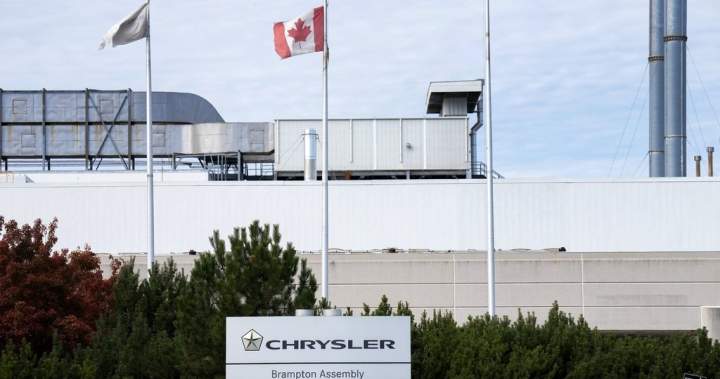
The prospect of U.S. automaker Stellantis using its Brampton, Ont., facility as a bare bones assembly plant for Chinese electric vehicles is being panned by Unifor.


The union confirmed Thursday that Stellantis is exploring the option of bringing in Chinese automaker Leapmotor to the idled plant to build electric vehicles.
It said the potential move, first reported by Bloomberg, could mean the automaker brings in an operation that relies on much of the manufacturing happening in China, leaving only minor assembly for plants abroad.
“Unifor has very grave concerns about this proposal because it is not manufacturing,” national president Lana Payne said.
“It doesn’t use the Canadian supply chain. There are no jobs in auto parts and very few jobs assembling these knock-down kits.”


Get breaking National news
Get breaking Canada news delivered to your inbox as it happens so you won’t miss a trending story.
Stellantis did not confirm any talks with Chinese manufacturers, but said in a statement that it is actively evaluating future programs for Brampton and is in discussions with government officials and key stakeholders.
The automaker bought a roughly 21 per cent stake in Leapmotor in 2023 and has since formed a partnership to expand production outside of China.
Stellantis said it remains focused on a strong Canadian footprint with an objective of ensuring any investment decision is sustainable and a long-term commitment that supports workers and suppliers.
The future of the Brampton plant is unclear after Stellantis announced last year that it was moving production planned for the site to the United States.
The decision, leaving about 3,000 workers furloughed, came after the U.S. imposed tariffs on auto imports with an aim to bring more production in-country.
Federal Industry Minister Mélanie Joly’s office said in a statement that the automaker’s decision to move Jeep Compass production to Illinois was unacceptable and that it’s working with the company, Unifor and the Ontario government to secure production.
The potential of bringing Leapmotor to Canada comes after the federal government announced it was lowering tariffs on 49,000 Chinese EVs per year to 6.1 per cent from a prohibitive 100 per cent.
Prime Minister Mark Carney said at the time that he expected the deal would drive “considerable” new Chinese joint-venture investment in Canada and create new auto manufacturing careers for Canadian workers.
Unifor and Ontario Premier Doug Ford criticized the deal, saying it would end up being harmful to the Ontario manufacturing base.
© 2026 The Canadian Press