


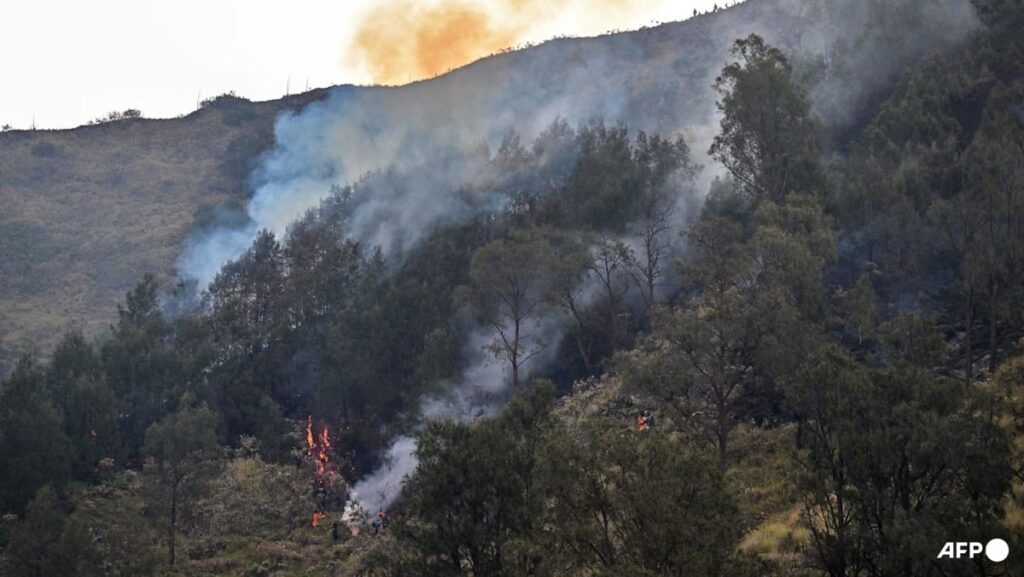
Prasetyo said the Indonesian government is making every effort to extinguish and contain the fires to prevent them from spreading to other areas.
The government has also ordered the Meteorology, Climatology and Geophysics Agency (BMKG) to prepare weather modification operations.
BMKG had said intensified impacts from El Nino during the dry season have heightened risks of drought and wildfires in multiple regions nationwide.
Djamari said on Monday the government had deployed 43 helicopters and prepared over 10 aircraft used for water-bombing operations to tackle wildfires.
“We are working as hard as possible to avoid disturbing other parties, including neighbouring countries close to us,” Djamari said.
As of Monday, Indonesia had not received any official complaints or reports from its neighbours regarding haze pollution coming from Indonesia, he said.
Beyond aerial support, ground operations include fighting the fires using flexible tanks as temporary water reservoirs to ensure a steady water supply in difficult terrain.
Weather modification technology is also being prepared to boost rainfall over impacted zones currently concentrated across six high-risk provinces – Riau, Jambi, South Sumatra, West Kalimantan, Central Kalimantan and South Kalimantan.
Indonesian authorities identified these regions as primary targets due to their extensive peatlands, which become highly flammable during the dry season and can burn underground for extended periods.
Meanwhile, in Malaysia, haze conditions have worsened in Sarawak with 11 areas recording unhealthy Air Pollutant Index (API) readings as of Tuesday morning, local media reported.
Serian town recorded an API of 189, according to the Department of Environment’s Air Pollutant Index Management System, nearing the “very unhealthy” level, Harian Metro reported.
Sarawak premier Abang Johari Openg has urged Sarawakians to take precautions against current hazy conditions in the state, while his deputy premier Sim Kui Hian said all outdoor activities would be stopped once the API hits the “very unhealthy” level of 200 and above.
In Singapore, the National Environment Agency (NEA) said on Sunday that dry conditions are expected to continue in the coming week which could increase the risk of haze if fires in the region persist.