


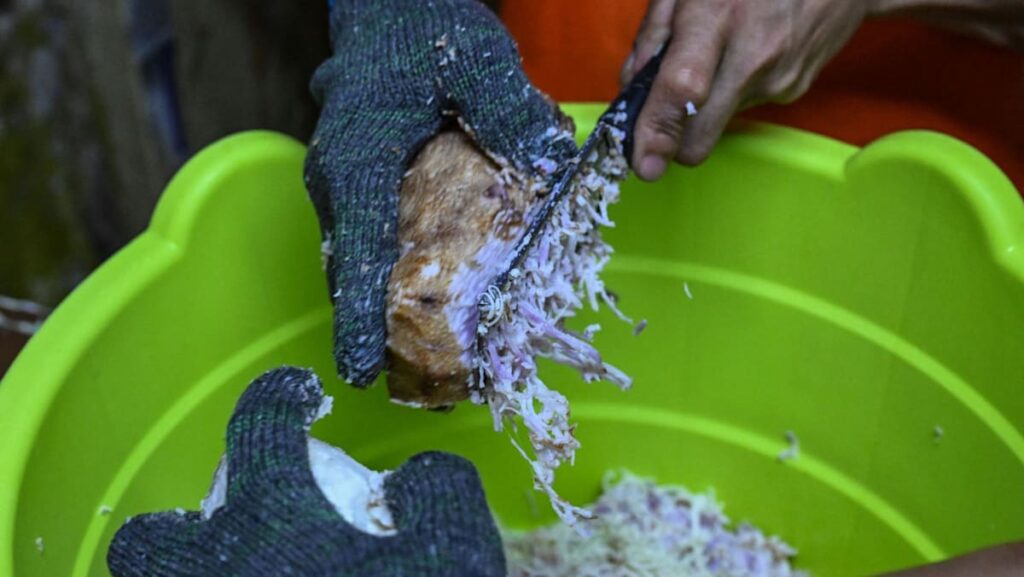
Sold as powder, extract, paste, or frozen puree, ube is easily mixed into coffee, pastries, ice cream, spreads and even make-up.
At a Tokyo gelato shop, ube importer JP Mercado told AFP the Japanese market was expanding rapidly after the craze first hit neighbouring South Korea.
“It’s really taken off like wildfire,” he said as a batch of powder was slowly stirred into gelato, turning it a bright purple.
“I think social media has been hugely impactful,” he said, adding his client list ranged from small cafes to luxury hotels.
ROOTED IN HISTORY
Ube was a staple of Philippine gardens as long as 5,000 years ago, boiled and eaten by families as a substitute to rice when their provisions ran out.
Beloved for its mildly sweet, nutty flavour and velvety texture, it later evolved into a party food, consumed as a jam or stewed with sticky rice balls in coconut milk.
Demand exploded locally this decade, most memorably during a purple bread mania that swept the archipelago in the darkest days of the COVID-19 pandemic.
“I’m super-obsessed with ube,” university student Kym Trivino told AFP as she sipped an ube-matcha concoction at one of Manila’s largest shopping malls.
Baker Diane Bustos said her company now sells seven types of ube cookies.
“It took over matcha. That’s really something that we Filipinos should be really proud of,” she said, referring to the bright green tea powder popularised by Gwyneth Paltrow and other celebrities.