


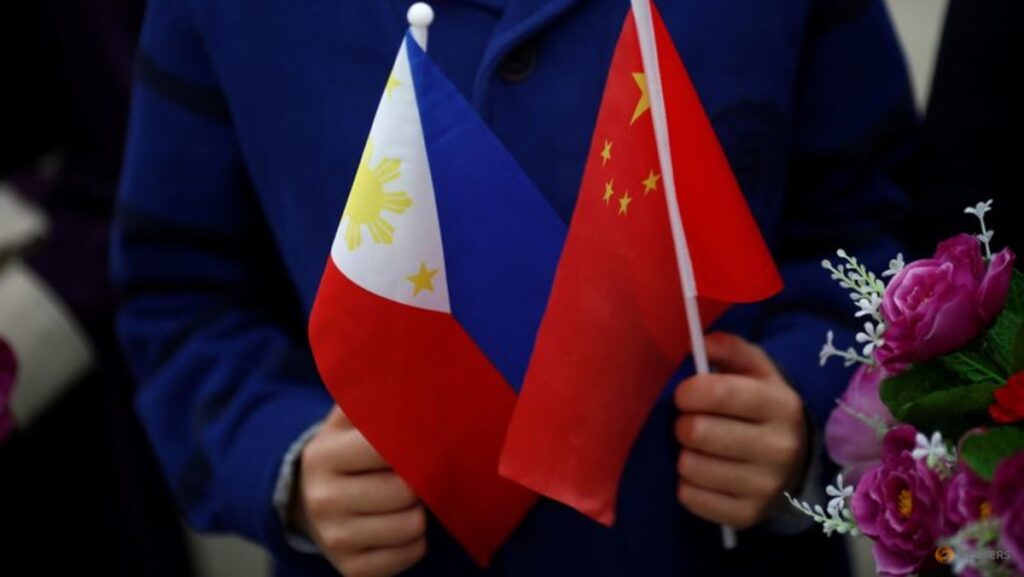
For Beijing, managing ties with Manila is therefore not just about bilateral relations, but about shaping the broader strategic landscape in Southeast Asia, said Ian Seow, a senior analyst in the China Programme at RSIS.
That calculus extends to ongoing negotiations on the Code of Conduct (COC) for the South China Sea, said Seow, adding that the code’s value lies less in resolving tensions than in its signalling function.
“For China, it uses the COC negotiations to demonstrate that it is a responsible great power… thereby helping to deflect criticisms of its assertiveness,” he said, noting that the talks allow Beijing to signal its willingness to engage ASEAN states through dialogue on managing disputes, even as tensions persist.
At the same time, the process provides ASEAN states, including the Philippines, with a platform to engage Beijing diplomatically and manage tensions even as disputes continue, he added.
THE US FACTOR
The role of Washington remains central to how China and the Philippines are calibrating their moves, said analysts.
Uncertainty surrounding US policy under President Donald Trump is shaping Manila’s thinking, with leaders closely watching how Washington responds to crises elsewhere, said Davis.
“The ‘Trump factor’ certainly has to play a role,” he said, noting that Manila will be assessing US responses vis-a-vis Ukraine and NATO, as well as its approach to Taiwan, to gauge “to what extent they can count on a US under Trump”.
How Washington handles the war in Ukraine and its approach to military alliance with Europe via the North Atlantic Treaty Organization – particularly on commitments and burden-sharing – is being closely watched by partners assessing US reliability.
Manila will also be closely watching Washington’s approach to Taiwan, especially how Trump responds to Chinese efforts to push the US away from its long-standing policy of “calculated ambiguity” on US’ commitment to Taiwan’s defence in exchange for improved Sino-US trade ties, Davis added.
China regards Taiwan as a breakaway province and has not ruled out the use of force to achieve unification.
At the same time, concerns about being reliant on the US and left exposed in a crisis are driving the Philippines to hedge its bets, Davis added.
“Manila doesn’t want to be left in the lurch… so they are mitigating risk through strengthening relations with other partners, and at the same time, seeking to reduce the tension with China,” he said.