


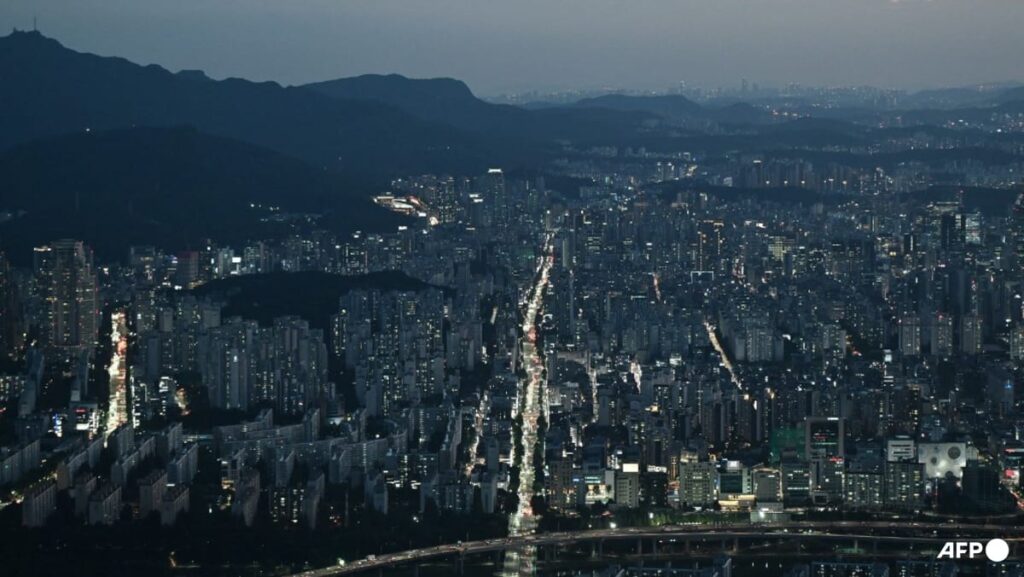
SEOUL: South Korea announced plans on Thursday (Sep 3) to put a second presidential office and legislative complex in the administrative city of Sejong, as it accelerates efforts to move hundreds of institutions out of Seoul in a bid to lessen the capital’s dominance.
The nation has long struggled with a widening divide between regions, with about half its 51 million people concentrated in the Seoul metropolitan area for jobs and education opportunities.
The plan, which also includes relocating the gender equality ministry and prosecution service, is the latest in a decade-long push to move state bodies out of Seoul and promote balanced development.
Relocations began in 2012, when the prime minister’s office moved to Sejong, about 120km south of Seoul.
Since then, 44 central government bodies – including the finance and health ministries – have already relocated to the city.
Officials said 350 public institutions based in the Seoul metropolitan area will have their relocation plans finalised in 2026.
“Balanced growth is now no longer a matter of choice, but a survival strategy for a sustainable South Korea,” said Prime Minister Han Seong-sook in a briefing.
The government aims to complete a second presidential office in Sejong by August 2029 and a second National Assembly building by 2033, Han said.
The foreign and unification ministries could also be relocated once the presidential office and National Assembly complex are completed, according to Interior Minister Yun Ho-jung.
The announcement follows plans by chip giants Samsung Electronics and SK hynix to invest 800 trillion won (US$589 billion) in a chip hub in southwest South Korea, also aimed at reducing regional inequality.
Many regions face shrinking and ageing populations, forcing schools and children’s clinics to close, as the country grapples with one of the world’s lowest birth rates.
As of 2024, 130 of South Korea’s 228 cities, counties and districts – or 57 per cent – were classified as being at risk of disappearing due to population decline, according to the government.
The Seoul capital region accounts for just 12 per cent of its land but 53 per cent of national GDP – and more than three-fifths of the country’s research and development investment, according to OECD data.
“The starting point of virtually all the major problems South Korea currently faces is the extreme imbalance in the country’s development,” said President Lee Jae Myung last week during a meeting.