




SpaceX didn’t just rewrite the playbook for aerospace and defense, it helped birth a new space economy.
Now Elon Musk’s company is tackling a different type of moonshot: going public.
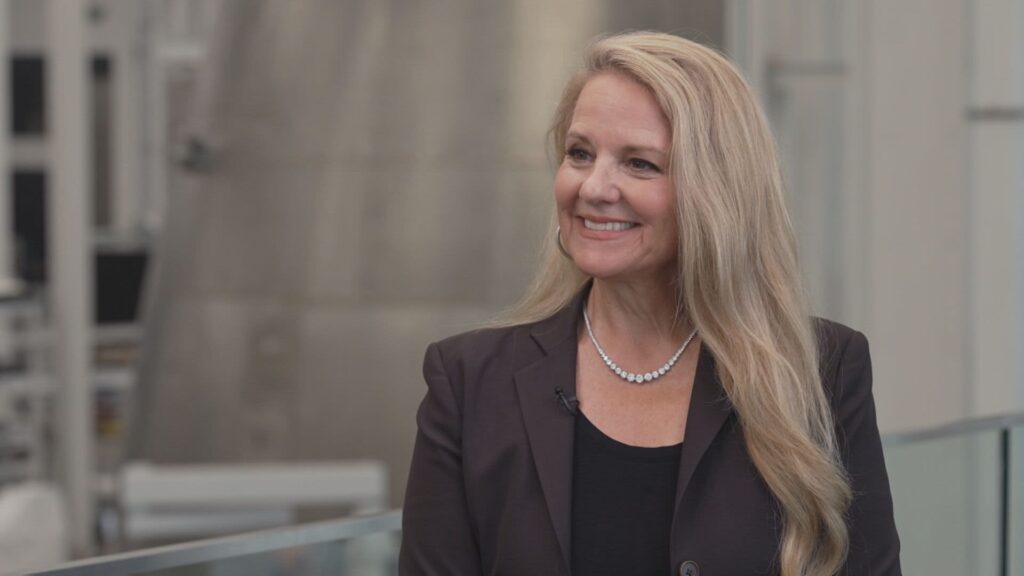
“I wasn’t sure we would go public,” SpaceX Chief Operating Officer Gwynne Shotwell told CNBC in an exclusive interview, just before the company started its investor roadshow. “It actually feels like the right time now.”
Follow CNBC’s live updates on the SpaceX (SPCX) IPO
Speaking from a walkway overlooking the Starship factory at SpaceX’s rapidly expanding headquarters in the company town of Starbase, Texas, Shotwell said the rocket maker needed to be private in order to focus on long-term goals rather than quarterly financials.
“Today, across SpaceX’s various businesses, the building blocks of a publicly traded company are now in place,” she said. Eight years ago, Shotwell said an IPO probably wouldn’t happen until SpaceX was doing regular missions to Mars.
Shotwell is SpaceX’s top executive underneath Musk, the founder, CEO, technology chief and board chair, and the person who’s stated goal is to make life multiplanetary. Musk focuses on high-level strategy and deep dives into the technical development of the future.
Making the business work on Earth is the job of those around him, namely Shotwell. An early employee recruited in 2002, SpaceX’s first year, Shotwell oversees the day-to-day operations of a 22,000-person full-time workforce. She’s managed everything from rocket development to the creation of Starlink and, more recently, the integration of xAI. She also talks to customers, regulators and, starting now, public investors.
“Elon jokes that we make the impossible, we just make it late,” said Shotwell, who is also one of the company’s eight board members. “Look at our track record, look at our history. We do really difficult things. We do bring them to product level. In fact, xAI is definitely starting to be product-focused.”

Engineering advanced technology to tackle tough business cases others have deemed unviable, and then commercializing them, is the SpaceX playbook.
With rocketry, the company underbid competitors for launch contracts, implemented reusable boosters, and drastically drove down the cost to fly to space. Making Starlink work involved sending satellites to low Earth orbit and doing so economically. Now, with artificial intelligence infrastructure, SpaceX has its sights set on building a vertically integrated tech stack stretching into space and encompassing everything from chips to AI applications.
With a record $75 billion IPO, SpaceX carries a stratospheric valuation of nearly $1.77 trillion. At that market cap, SpaceX would debut as the seventh most-valuable company in the U.S., surpassing Meta and Musk’s other public company, Tesla. It would also be worth more than the entire S&P 500 aerospace and defense group.
Skeptics on Wall Street are questioning the math. The valuation suggests an estimated 2026 revenue multiple of 40 and an adjusted earnings multiple of 175.
SpaceX wants to become the ultimate product-driven infrastructure company, a modern-day railroad for the new industrial revolution. But unlike Union Pacific in the 19th century, SpaceX is also looking to own the supply chain and at least some of the factories along the route.
Musk has sold investors on hard things in the past. In Tesla’s 16 years as a public company, he’s driven the market cap up on a promise of humanoid robots and self-driving cars.
“We’ve been feeling over the last few years a lot of pressure from everyday Americans and our friends that wanted to buy stock, and there was just no way for these folks to get in,” said Shotwell.
Convergence of space and AI
Shotwell stressed that SpaceX’s horizons are very long term.
“I do not want to focus on quarterly earnings,” she said. “I’m not saying we’re not going to do right by our investors, but what folks who invest in SpaceX need to know is that what we’re doing is very futuristic.”
SpaceX’s clearest moat is in rocket launching. Its Falcon fleet currently dominates that market, accounting for roughly 80% of global mass launched to orbit since 2023. Last year SpaceX launched 165 orbital missions, with 157 of those utilizing reused rocket boosters. The cost to send cargo to low Earth orbit has fallen by more than 90% from the Space Shuttle to the Falcon 9.
Most of those launches, have been by SpaceX for SpaceX, as the company rapidly deploys its Starlink broadband constellation. With more than 10 million subscribers accessing the internet via a constellation of roughly 9,600 satellites and growing, Starlink is the company’s profit engine. The connectivity segment also includes the nascent Starlink Mobile direct-to-cell business and Starshield, which military experts say is reshaping warfighting.
Connectivity touts high margins and generates cash for heavy investments in other parts of the company. That’s especially important for the AI segment, which is primarily xAI after SpaceX acquired that part of Musk’s empire earlier this year. SpaceX said capital expenditures for AI totaled $12.7 billion in 2025 and $7.7 billion in the first quarter of 2026.
With xAI comes the Grok large language model and X, formerly known as Twitter. And to entice developers, the company struck a deal with AI coding upstart Cursor, with an option to buy the business for $60 billion in stock.
Then there’s the Terafab semiconductor fab and computing mega project that it’s jointly developing with Tesla. Intel recently signed on as a partner and supplier. The cost of Terafab is expected to ultimately run into the hundreds of billions of dollars.
And in and around Memphis, Tennessee, SpaceX has the Colossus data centers. SpaceX has recently been striking multibillion-dollar deals, first with Anthropic and then with Google, to provide them with spare compute capacity. The monthly payments, as long as they exist, will help SpaceX offset its hefty capital spending.
“I see us not only building the tech stack required for AI and operating the X platform, but we are builders of data centers, both here on Earth and in space,” said Shotwell. “I believe we will continue to provide that capability to others actually. We will never sell compute capacity that we actually need, which is why we wanted the ability to have these contracts be short term if necessary.”Cloud infrastructure is a highly competitive business. SpaceX is betting it moves into orbit, solving for a number of big earthy issues like scarcity of power, land and water preservation, and community pushback.

Musk has said it will happen in the next two to three years. Other space entrepreneurs like Jeff Bezos, Planet Labs’ Will Marshall, and Voyager Technologies’ Dylan Taylor, have recently argued it will take longer. There are technological challenges and manufacturing hurdles, and launch prices still need to fall dramatically.
Yet, SpaceX’s prospectus says that as soon as 2028, it will begin deploying AI compute satellites. Reports surfaced this week that the first demonstrations could head to orbit before 2026 is finished.
“The AI satellites are, to some extent, simpler than the next-gen V3 Starlink satellites,” said Shotwell. “I’m not saying it’s a slam dunk by any stretch but I’m not worried about the development of the AI satellites.”
The supply chain, she acknowledges, is a challenge, whether it’s investing in solar arrays or in building enough chips.
“I don’t think the chip manufacturers are thinking about scaling in the same ways that we’re thinking about scaling,” Shotwell said. “Or they don’t believe us.”
Starship is the launchpad for growth
Much of SpaceX’s future hinges on Starship. It’s one of the two vehicles contracted by NASA to provide the Artemis program’s human lunar landing systems. It’s also the system that could one day carry cargo and people to Mars.
Starship is SpaceX’s next-generation spaceship, taller then the Statue of Liberty and more powerful than any other rocket built. Unlike the workhorse Falcon 9, Starship is being designed to be fully reusable, the holy grail of space launch.
SpaceX recently completed its 12th test flight, debuting its newest version of Starship, known as V3, in what was a largely successful mission. SpaceX carries out each test aggressively, pushing its vehicles to the limits since leadership believes much more data can be gleaned from failures than success, a strategy sometimes referred to as “productive failure.”
When Starship comes online, it will exponentially increase mass to orbit while slashing launch costs, a necessary equation to make possible data centers in space. The expectation is Starship will enable a 95% drop in launch costs compared to Falcon 9.
Walking through the factory, Shotwell pointed out Starships and Super Heavy boosters in various stages of production. Currently SpaceX is turning out one fully assembled Starship per month. Shotwell wants to get to two ships produced per week.
She expects Flight 13 to happen in about a month, with regular flights monthly to follow. A lot needs to go right, though, and much of that timeline depends on the regulatory blessing of the Federal Aviation Administration. Orbital flights are expected by the end of this year.
“We have done an in-space Raptor lighting, so we feel pretty comfortable,” Shotwell said. “But we want another sub-orbital shot on the next flight, and then I hope we at least attempt an orbital injection on flight 14.”

Starship has cost $15 billion so far, money spent on technical development, ramping up the production line, construction costs at Starbase and the launch pad, as well as natural gas pipelines and wells. SpaceX develops propellant in-house.
Shotwell said SpaceX’s history of heavy investment on new technology enables it to undergo this “next-level” cycle with confidence.
“If I were to go back to the penurious days of Falcon 9 and Dragon, and we were to talk about the capital investments for that program compared to what we’re doing in AI, it would be a total mind blow situation,” she said.
The expanding Musk universe
In its first 23 years, SpaceX did very little dealmaking. That began to change last year when SpaceX agreed to acquire Echostar’s 65 megahertz of spectrum for $17 billion to help propel Starlink Mobile. Then came the deal for xAI at a $250 billion valuation and the Cursor agreement, which carries a potential price tag of $60 billion.
“It’s a new exciting world for us,” said Shotwell. “I do think M&A is in the future, especially when you look at the AI world.”
In an amended IPO filing SpaceX said it may issue “significant equity” to fund future transactions. That sparked more speculation that a merger between SpaceX and Tesla might ultimately be in the cards.
Shotwell quipped that such a deal “might make Elon’s life a little easier.”
“There’s no question that there are synergies between Tesla and SpaceX in our futures,” she said. “There’s a convergence of what we’re all trying to accomplish in the future, but right now I’m focused on keeping the lights on here, keeping rockets in production, flying rockets, flying people, getting to the International Space Station, and critically providing broadband to folks that don’t have access.”
Tesla holds an ownership stake in SpaceX. Starlink mini is a critical component for Tesla’s emerging Cybercab fleet. Tesla over the years has shared manufacturing innovations with SpaceX. And now the two are collaborating on Terafab. SpaceX even spent $131 million on Cybertrucks in 2025.
The merger chatter has been fueled in part by SpaceX’s unconventional, and some experts say, unprecedented, governance structure. Musk has supermajority voting rights, with more than 80% control. And with power over the board, he even has final approval regarding his own removal.
Shotwell argued it’s the best way to govern because nobody else can run the company.
“The company would not collapse, obviously, without Elon, but it would by no means be the same,” she said. “It’s incredibly important that he is the CEO, and that we have the governance structure that we’ve set forth.”
The ultimate goal, for Musk, remains Mars.
Musk’s compensation package involves 1 billion performance-based shares when certain milestones are met, including the establishment of a permanent human colony of at least 1 million humans on Mars.
“I’m sure there’s at least that many folks that want to go there,” said Shotwell.
In the meantime, SpaceX and its new public investors will focus on the IPO moonshot that will make its own kind of human history.
WATCH: SpaceX IPO is emblematic of space economy
