


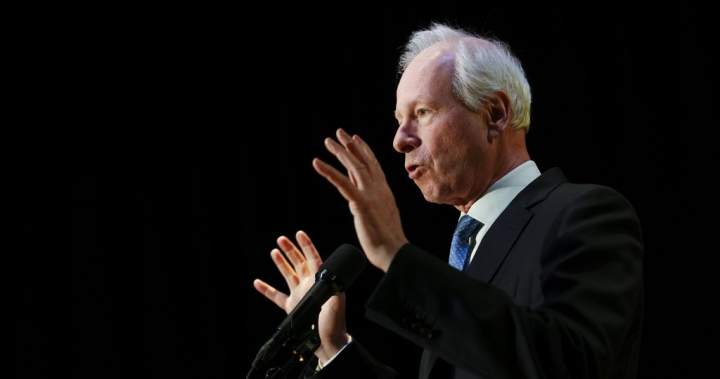
Former foreign affairs minister Stéphane Dion says Canada needs to substantially staff up its embassies in Europe and set deadlines for following through on the flurry of agreements Brussels has signed with Ottawa.


Dion’s comments come after Canada’s former military chief said Ottawa must stop cutting back on diplomats to boost defence spending.
“These agreements and partnerships must not remain on paper. They must be fully implemented,” Dion told the Senate foreign affairs committee on Wednesday.
“In Ottawa, in Brussels and in European capitals, we have work to do to ensure that commitments are translated into concrete actions.”
Dion was Canada’s ambassador to France until January and also a special envoy for Europe.

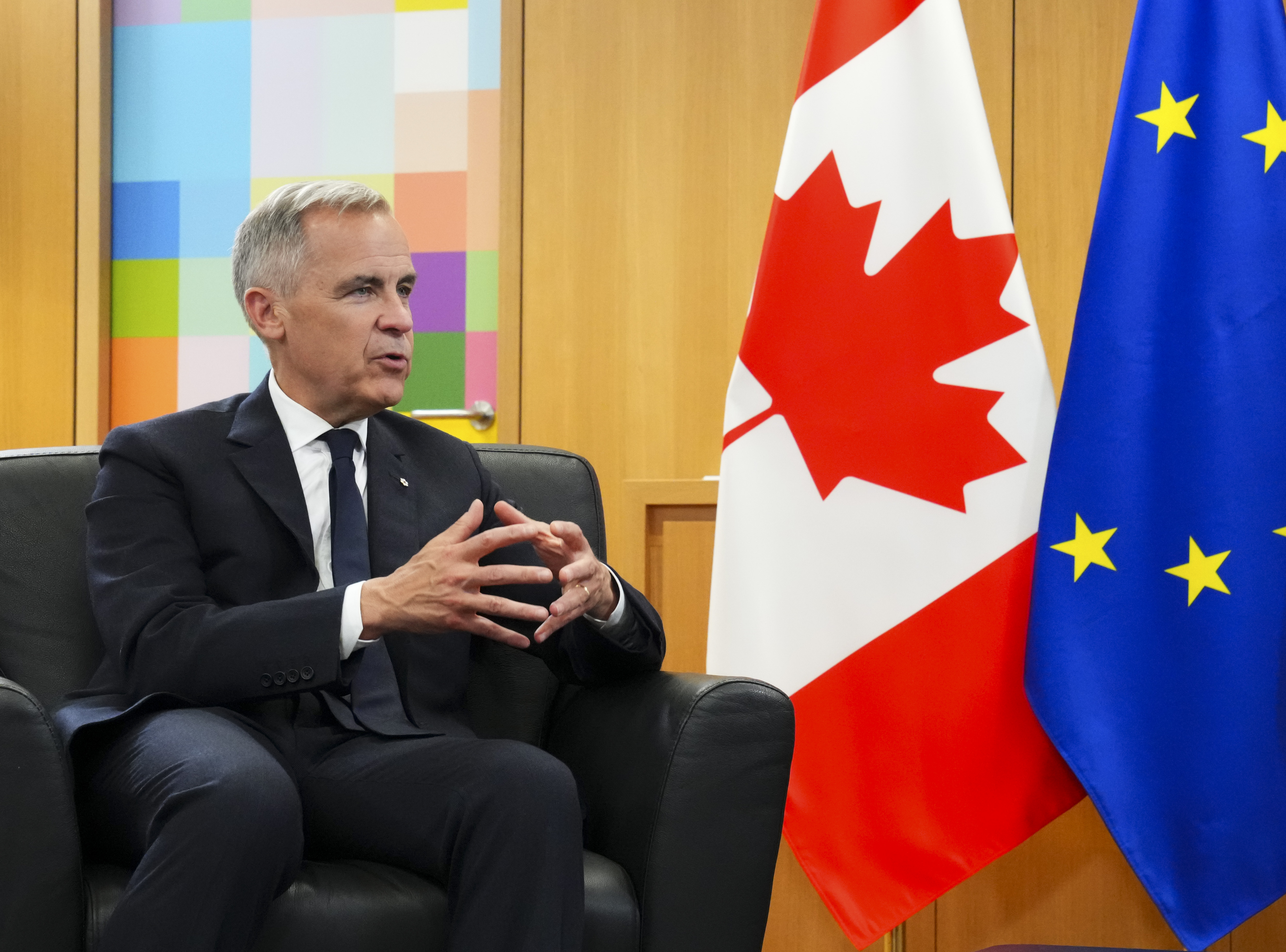
Dion told the committee that Prime Minister Mark Carney was right to appoint a personal envoy to the EU to oversee the various agreements Canada has signed in the defence, trade and research fields — a move Brussels has emulated with its own envoy.
But he said there should be a point person from each side who is publicly accountable for every single agreement Canada has signed with Brussels because it’s not clear how many of these ambitious plans are bearing fruit.
He noted that Canadian businesses are still not exploiting the full potential of the CETA trade deal between Canada and the EU that took effect in 2017.


Get breaking National news
Get breaking Canada news delivered to your inbox as it happens so you won’t miss a trending story.
“My suggestion then is to ensure that for each signed agreement, there are two senior officials — one Canadian, the other European — who are accountable for the implementation of these specific agreements, with specific objectives and deadlines,” he said.
Dion said Canada urgently needs to staff up its diplomatic presence on the continent. He argued that peer countries have more diplomats handling fewer files and urged Ottawa to focus its foreign service cuts on the headquarters in Ottawa, rather than missions abroad.
The Canadian Press reported last month that Global Affairs Canada is disproportionately cutting positions based abroad, with rotational posts being eliminated at three times the rate of staff who are based in Canada.
“Our resources are already underdeveloped for a G7 country and even compared with countries of lesser importance than ours,” Dion testified in French.
In remarks before a University of Ottawa panel on Tuesday, former chief of the defence staff Wayne Eyre called on Ottawa to hire more diplomats.
“We have to engage diplomatically to form those deep regional and country-specific knowledge and relationships. And I would argue cutting diplomats is not the way to do it. We should be going in the other direction,” Eyre said.
In Wednesday’s testimony, Dion also pushed back on an idea that has come up repeatedly as Canada has navigated a fraught new relationship with the United States — that of joining the European Union.
He called joining the EU a “false good idea.”
Dion noted some EU countries still haven’t fully ratified the 2017 trade deal with Canada and Ottawa would be joining a line of 10 nations seeking to join the bloc. Doing so, he said, would mean ceding sovereignty to Brussels and arguing over how provinces are represented there.
“Canadians will not accept this loss of sovereignty,” Dion said, adding such a move would require amending the Constitution.
“After that, Canada would be a half-country, so we would need to give more than what we would receive,” he said. “And you know how much equalization payments between Canadians is an issue. Imagine if we have to do that for foreigners.”

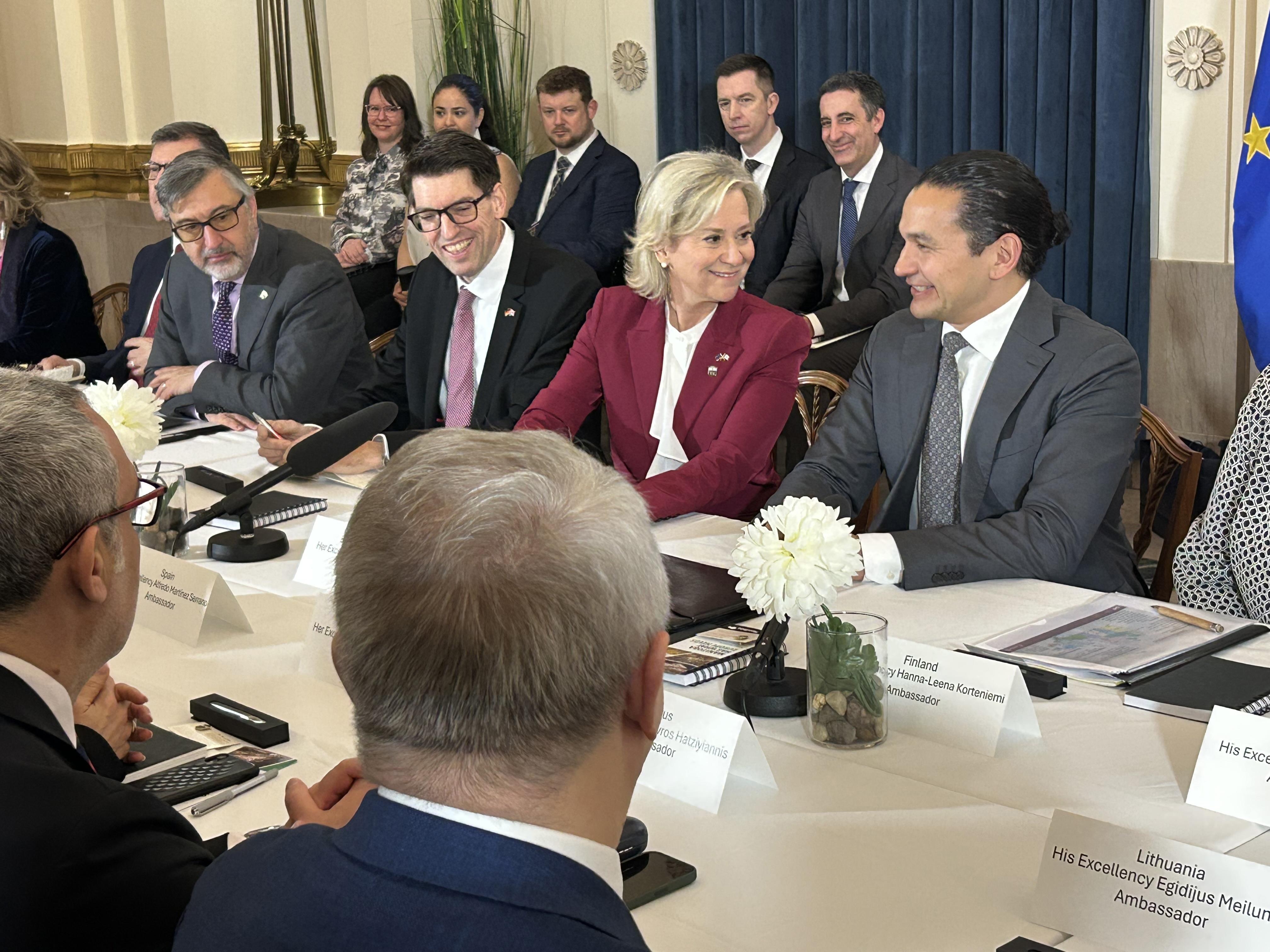
Geneviève Tuts, the EU ambassador to Canada, added that the EU only accepts members which are physically located on the European continent.
Achim Hurrelmann, co-director of the Centre for European Studies at Carleton University, told senators Wednesday that the idea of joining the EU is a distraction from work to improve relations.
“I find the media debate about Canada’s membership in the EU — and the way in which some European politicians have half-jokingly played into it recently — rather irritating. I think this debate could actually become politically quite dangerous, especially in the context of debates such as Alberta separatism,” he testified.
“It’s important that Canadian policy-makers focus on concrete and realistic steps that can be taken to improve Canada-EU relations, and it’s also important that Canadian policy-makers ask their European counterparts to do the same.”
Dion suggested that instead of EU membership, Canada should seek to join the European Political Community, a high-level forum for co-ordinating a response to the war in Ukraine and economic issues.
He also said the federal government should push to make Canada eligible for grants under a new EU research fund that will replace an existing partnership called Horizon next year.
Tuts urged Canada to rework policies that she said are undermining the rules-based trading order and the trade deal Ottawa has with Brussels, such as initiatives to give Canadian companies an edge in government procurement.
“Certain recent economic policies in Canada have created uncertainties for some EU companies,” she testified.
“‘Buy Canadian’ and similar provincial policies, as well as the steel and steel-derivative tariffs, undermine our balanced access agreed in CETA. And these come on top of some other measures, like the luxury tax on cars, cheese imports, or on wines and spirits.”
© 2026 The Canadian Press