


“Our expectations remain that the conflict will be with markets for the foreseeable future and the global economy will continue adjusting to the realities of the supply disruptions,” said Ian Lyngen at BMO Capital Markets.
Both main crude contracts rose more than 1 per cent Tuesday, and the lack of any progress in ending the conflict continues to put upward pressure on fuel costs.
Average UK diesel prices have hit a record high, according to the RAC motoring organisation.
Equity markets struggled following a day in the red for all three main indexes on Wall Street.
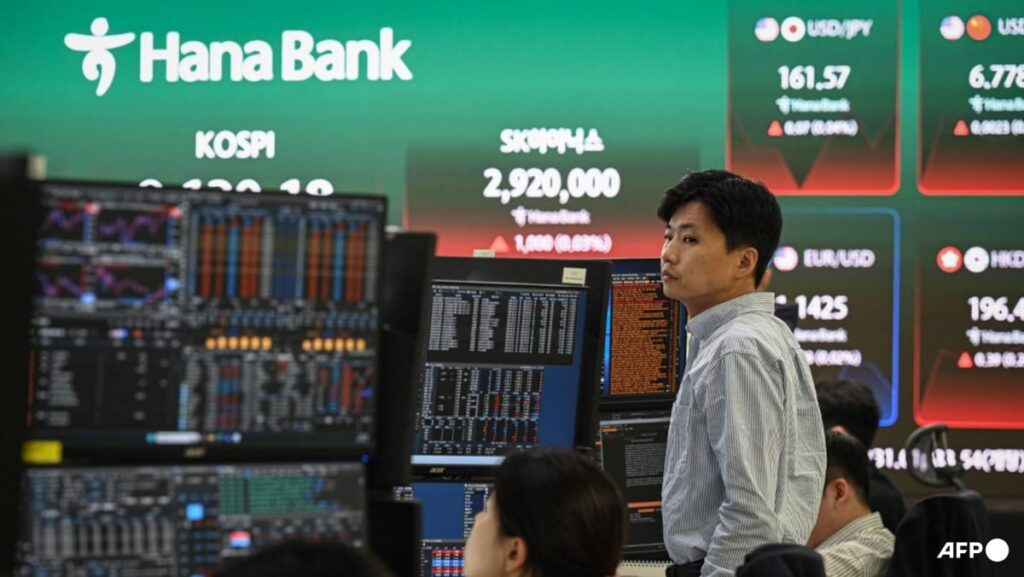
Tokyo, Seoul, Hong Kong, Shanghai, Singapore, Taipei, Wellington, Manila and Sydney were all down.
Gold held Monday’s steep losses to sit around US$4,160 as traders bet on more rate hikes, which makes the non-interest-bearing metal less attractive.
Investors are also gearing up for the release of key US inflation and jobs data this week that could play a role in the Fed’s decision-making, with markets pricing in a second successive rate hike at the end of October.
“The main concern for markets isn’t that employment conditions could suddenly weaken. It’s almost the opposite,” wrote Fiona Cincotta at FOREX.com.
“Economic data has remained surprisingly strong despite higher rates and energy prices,” she added.
“Typically, stronger non-farm payrolls (jobs) are positive for stocks, but that is not necessarily the case when inflation is also rising sharply.
“Strong employment could instead strengthen the case for the Fed to keep rates higher for longer, or even hike rates again to bring inflation under control.”
In company news, fast-fashion giant Shein fell 6 per cent in Hong Kong after releasing disappointing earnings.
The report was the firm’s first since listing at the start of the month following a high-profile US$1.7 billion initial public offering.