


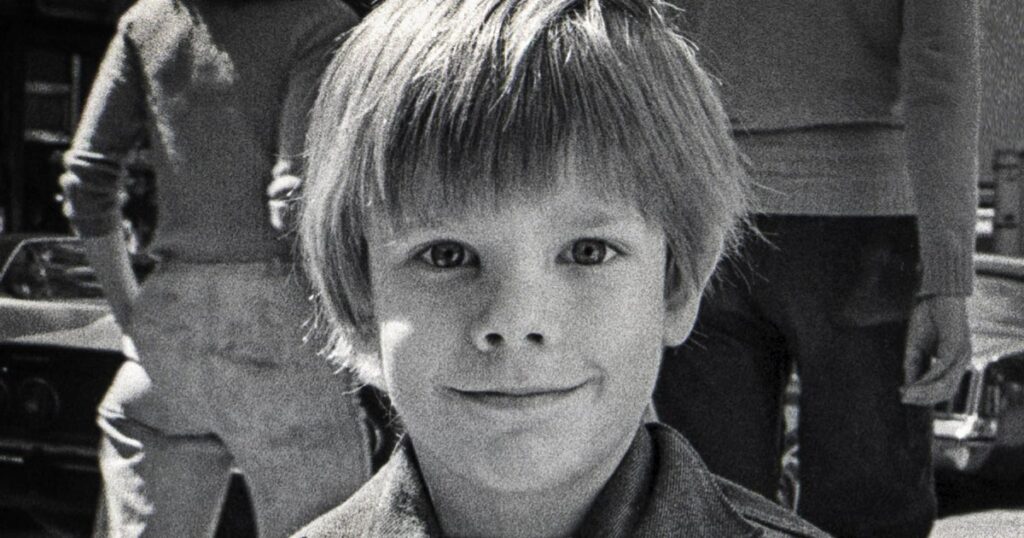
The Supreme Court on Monday reinstated a murder conviction in the 1979 disappearance of 6-year-old Etan Patz, whose case shocked New York City and changed the way parents watched over their kids.
The justices, by a 6-3 vote, granted an appeal from New York prosecutors who had urged them to undo a federal appeals court decision that overturned the verdict. The three liberal justices dissented.
Prosecutors had been preparing to try the man, Pedro Hernandez, for a third time. His first trial ended in a mistrial.
The unanimous panel of the U.S. Court of Appeals for the Second Circuit reversed Hernandez’ murder and kidnapping conviction in the second trial because of how the judge had answered a question from jurors.
Manhattan District Attorney Alvin Bragg had called the basis for overturning the conviction “a slender reed” that essentially ignored a 5-month-long trial with 66 witnesses.
The Supreme Court justices agreed, in an unsigned opinion, that federal courts should not second-guess state courts under a 1996 federal law that was intended to reduce federal court oversight of state criminal trials.
“The Second Circuit exceeded its authority in holding that Hernandez is entitled to relief,” the high court wrote, referring to the New York-based appeals court.
Hernandez, 64, has been serving a sentence of 25 years to life in prison. Monday’s decision means he will continue to serve his sentence at the Elmira Correctional Facility in New York. He will be eligible for parole in 2037.
Attorneys for Hernandez said, “We are firmly disappointed with the decision because we firmly believe that an innocent man is in jail for a crime he did not do.”
Hernandez admitted to the crime under police questioning, but his lawyers say he confessed falsely because of a mental illness that sometimes made him hallucinate. They emphasized that the admission came after police queried him for about seven hours before reading him his rights and recording the interview. Hernandez then repeated his confession on tape, at least twice.
Etan Patz walked out of his New York City home headed for a school bus stop just two blocks away. He had asked his parents to let him do the short walk to the bus stop alone for the first time. He had a dollar to buy a soda at a corner deli.
The 6-year-old never made it to school that day in May of 1979, and he’s never been found.
Hernandez worked at a nearby convenience shop at the time, but the Maple Shade, New Jersey, resident didn’t become a suspect until 2012.
Etan was among the first missing children ever to appear on milk cartons, and the anniversary of his disappearance became National Missing Children’s Day.
Hernandez already has been tried twice. A jury deadlocked in 2015, and then a different panel of jurors convicted him at a 2017 retrial.
During deliberations, the 2017 jurors asked a complicated question: If they decided Hernandez didn’t confess voluntarily when he hadn’t been read his rights yet, must they disregard his other confessions? The then-judge responded simply, “the answer is no.” The jury went on to convict.
In overturning that verdict, the appeals court said the jury’s question should have gotten a more fulsome answer, including the possibility of discounting all the confessions.