


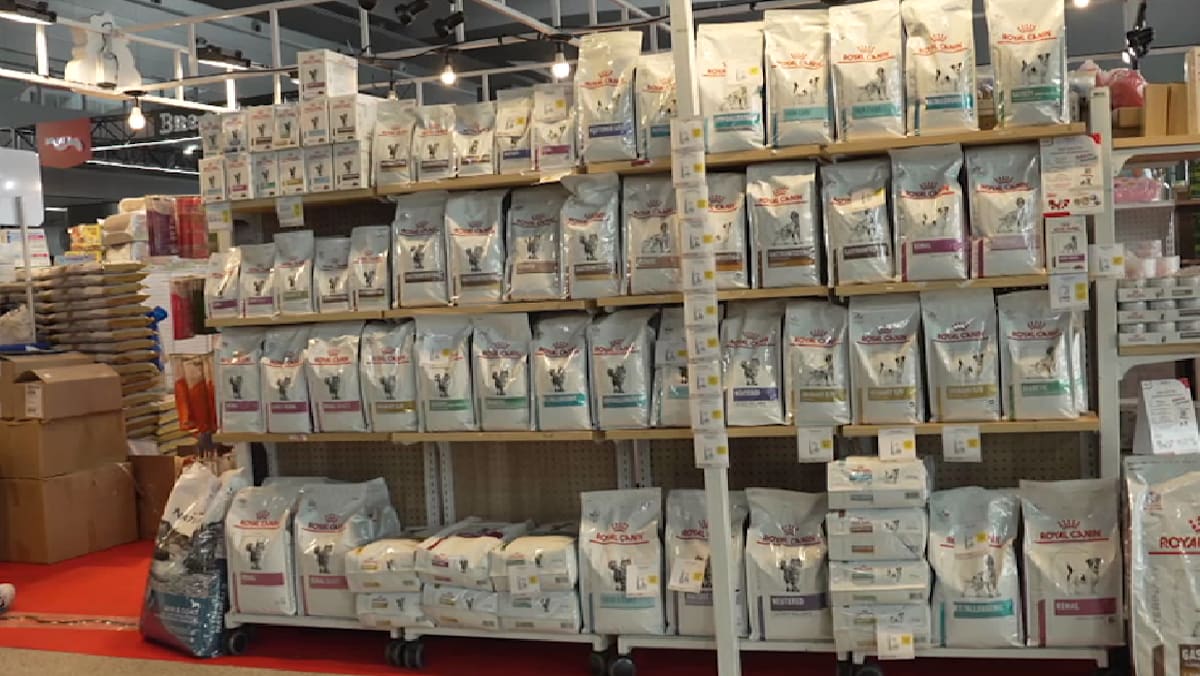
RISING PET OWNERSHIP
The broader industry’s performance reflects that optimism, said analysts.
Thailand exported US$1.68 billion worth of dog and cat food in the first seven months of 2025, up 10.7 per cent from a year earlier.
In 2024, the country held about 10 per cent of the global pet food export market, behind Germany’s 12.3 per cent.
Analysts attribute Thailand’s rise to its reputation for quality and production standards, as well as global shifts in consumer behaviour.
Rising pet ownership and the “humanisation” of pets – where animals are treated as family members – have driven demand for premium products.
The shift is driven in part by demographic changes, analysts say.
With smaller households, ageing populations and the rising cost of raising children, more consumers are opting for pets.
In Thailand, pet owners now spend up to US$1,600 per pet annually, a 23 per cent increase from the previous year.
For some owners, that spending reflects a deeper lifestyle shift.
“We don’t plan to have kids. We have dogs, so we kind of treat them like family members,” said pet owner Navin Pukphan.
The Thai government sees the pet industry as an increasingly important pillar of the country’s manufacturing and export economy.
But despite its strong outlook, risks are mounting.
“There is still potential and room for growth. It just may not be in a direction where it rises rapidly,” said Wanwisa Sriratana, head of Kasikorn Research Center, the research arm of Thailand’s Kasikornbank.
She highlighted several concerns such as economic uncertainty and rising global competition.
Even so, the domestic market could offer a buffer.
Bangkok alone is home to more than 310,000 pets, and demand continues to rise as more people choose pets over parenthood.
Experts believe Thailand’s ability to sustain its momentum will depend on how it navigates an increasingly competitive and uncertain global landscape.

