


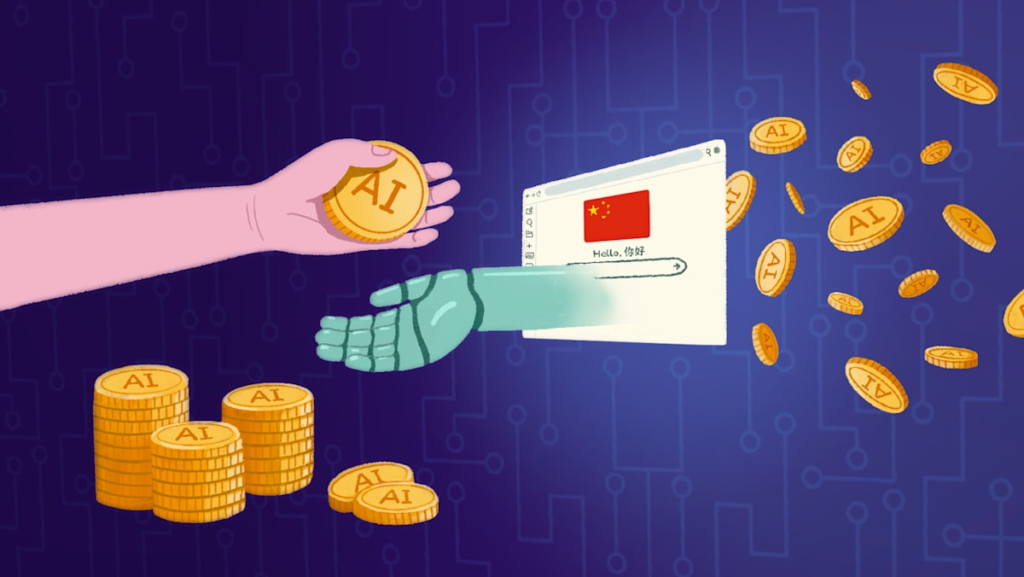
Chinese telecom operators are already moving to monetise that shift.
Earlier this month, China Telecom, one of three major state-backed mobile operators in mainland China, unveiled nationwide token-based pricing plans aimed at a broad range of customers – from casual users to developers and businesses.
Consumer plans designed for everyday AI tasks start at 9.9 yuan (US$1.45) a month for 10 million tokens, rising to 49.9 yuan for 80 million tokens.
Depending on the task, a subscription package of say 10 million tokens could support thousands of AI-assisted searches, chatbot prompts and conversations and generating translations.
Enterprise-focused packages supporting applications such as coding assistants and AI agent deployment range from 39.9 yuan to 299.9 yuan per month and include between 15 million and 250 million tokens.
“Tokens are becoming to AI what kilowatt-hours are to electricity or gigabytes are to mobile data – the practical unit by which usage is measured and priced,” Pang said.
SECURITY RISKS OF CHINA’S TOKEN BOOM
But while token-heavy AI ecosystems create opportunities for new business models and greater efficiency, they also introduce risks.
New cyber scams are also emerging, with some “repackaging tokens as investment products”, Chinese officials said.
Authorities have begun warning about potential security threats linked to their rapid growth.
The Ministry of State Security issued a public advisory in April, highlighting risks including token theft, forgery, tampering and fraud schemes involving low-cost token packages and AI-related resale programmes.
“If token security is breached at scale, the impact may spill over from personal privacy and financial loss to broader data security and even economic security,” said Huang Daoli, a state researcher at China’s Ministry of Public Security, who added that tokens should be treated as highly sensitive credentials, no less important than payment tools.
“Token-heavy AI ecosystems bring opportunities … However, they can also create new challenges and vulnerabilities around data leakage or infrastructure attacks,” said Heng Wang, a law professor at Singapore Management University (SMU).
As AI systems process ever larger volumes of data and tokens, cybersecurity risks could also “increase substantially”, Wang said, adding that “more data protection is likely needed if more data is processed”.