


A new argument is being made in a B.C. courtroom this week that could have consequences across B.C.


Some U.S. tribes with traditional territory in B.C. say they should also get a say in economic decision-making.
This week, a judicial review is underway in Rossland Provincial Court about a magnesium mine, proposed by West High Yield Resources and the Osyoos Indian Band.
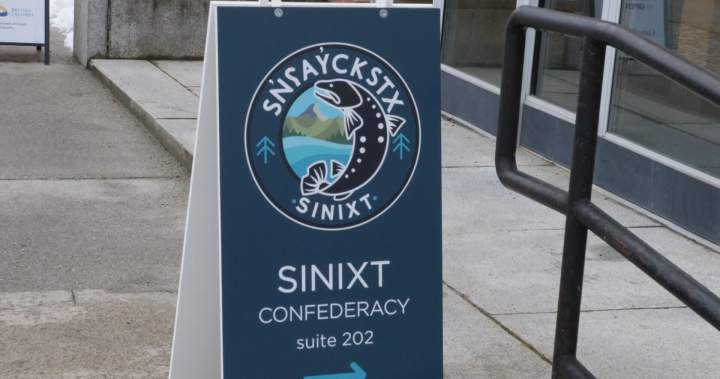
Participating in the review and pushing for an injunction to remain in place is the Sinixt, a U.S.-based Indigenous group that says the project sits on its traditional land.
The Sinixt is one of two U.S. groups tabling a new argument that it and Southeast Alaska Tribes say the Gitxaala BC Court of Appeal Decision, which torpedoed the province’s Mineral Tenure Act, proves that DRIPA, the Declaration on the Rights of Indigenous Peoples Act, is now overriding the law of the land.
“The UN Declaration is actually fairly silent on international boundaries,” Guy Archibald, executive director of the Southeast Alaska Indigenous Transboundary Commission, said.


Get daily National news
Get daily Canada news delivered to your inbox so you’ll never miss the day’s top stories.
“DRIPA, by implementing the UN declaration, somewhat erases those boundaries.”
Archibald said that American tribes with traditional territory in B.C. should get a say in major economic decisions here.
“Reconciliation is not an aspirational act here. It’s challenging the status quo,” he said.
Thomas Isaac with Cassels Aboriginal Law Group, is also a former chief treaty negotiator for the B.C. government and said that American tribes are applying the law as written.
“They’re applying the law that the B.C. government put in place and there’s nothing in UNDRIP that restricts it to Canadian aboriginal peoples,” he said.
Last month, B.C. Premier David Eby backed down on suspending DRIPA.
Eby said that DRIPA legislation has been “probably the most challenging issue I’ve worked on in government.”
An expert in Aboriginal law and treaty matters told Global News last month that, in his opinion, the NDP is now co-governing the province with First Nations.
Geoffrey Moyse was legal counsel in the B.C. Ministry of Attorney General’s Office and for more than 30 years he advised governments on Aboriginal law and treaty matters.
“I have never seen anything like this… over six terms of governments, working for the provincial government,” he said.
“I have never seen this level of ineptitude and incompetence.”
Isaac said that B.C. might be the only jurisdiction on the planet to allow non-citizens to assert constitutional-level rights within its borders.
“Yet in Canada, it seems like anything goes in this country and at what point do we say enough is enough,” he said.
© 2026 Global News, a division of Corus Entertainment Inc.