


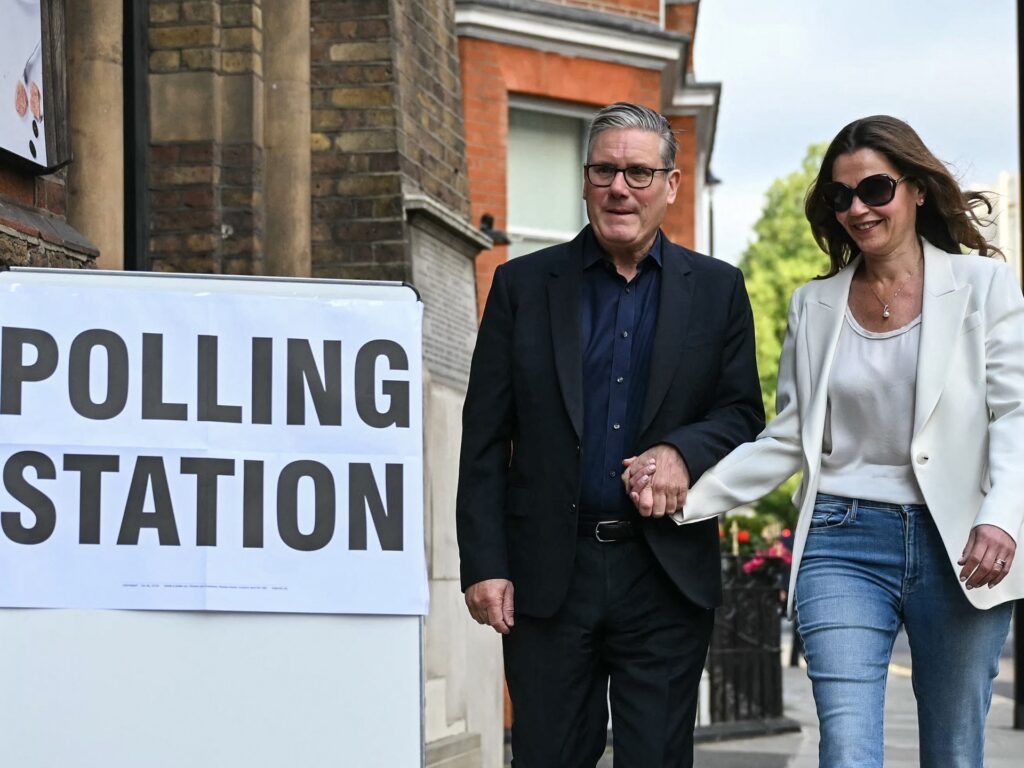
Nigel Farage’s populist party Reform UK has made early gains in local elections with wins in Labour heartlands.
United Kingdom Prime Minister Keir Starmer’s Labour Party is bracing for heavy defeats in local elections, with Reform UK poised to make gains across the country, according to early results.
Labour’s woes were already evident as the country woke up on Friday morning, with the governing party losing more than 258 seats and Nigel Farage’s populist party Reform UK gaining 382 seats by 9am local time (06:00 GMT).
Recommended Stories
list of 1 itemend of list
The election is seen as a key test of Starmer’s leadership, with Labour trailing behind Reform UK in opinion polls in recent months. In response to the early results, Starmer said he would take responsibility for the outcome but indicated that he would not step down.
“Days like this don’t weaken my resolve to deliver the change that I promised,” Starmer was quoted by GB News as saying. “The results are tough, they are very tough, and there’s no sugarcoating it,” he said during a speech in West London on Friday morning.
“We have lost brilliant Labour representatives across the country, these are people who put so much into their communities, so much into our party,” he added. “And that hurts, and it should hurt, and I take responsibility.”
‘Red Wall’ losses
Some of Labour’s biggest losses have been in the so-called “Red Wall’ strongholds, a belt of former industrial areas spanning the north of England that have traditionally voted for the centre-left party, where many of Starmer’s ministers hold seats.
Reform UK has made early gains in Greater Manchester and the Liverpool City Region, with more results to come in.
In Wigan and Leigh, two former mining towns in North West England, Reform UK won 24 of 25 seats, and in nearby Tameside, it managed to end 47 years of Labour dominance of the region’s council.
Reform UK gained its first council of the campaign with Newcastle-under-Lyme in Staffordshire switching to the populist party from the Conservatives.


So far, it is a mixed day for the Conservative Party – which governed the UK from 2010 to 2024 – making gains in London, including Westminster Council, but losing 139 seats.
The Greens, which were expected to challenge Labour from the left of the political spectrum, have so far failed to translate hype into votes, gaining only 23 seats so far.
Green Party leader Zack Polanski had capitalised on anger in the UK over Israel’s genocidal war on Gaza and gained the support of younger voters.
What is being voted for
There are about 5,000 seats up for grabs in 136 English councils, including in 32 boroughs in London, where Labour has traditionally dominated.
Six mayoral elections will also take place in Croydon, Hackney, Lewisham, Newham and Tower Hamlets in Greater London, as well as nearby Watford.
Voters will decide all 129 seats in the Scottish Parliament, divided between 73 constituency MSPs and 56 regional MSPs, and the party with the most seats will form the next government, with the leader becoming the Scottish first minister.
In Wales, 96 seats will be decided by proportional representation, with the party with the biggest share leading the government.