


Pakistan says talks between the United States and Iran which were postponed on Friday will begin in Switzerland on Sunday, as Tehran announced it was again closing the Strait of Hormuz because of continued Israeli attacks in Lebanon.
Iran’s foreign ministry spokesman, Esmail Baghaei, confirmed on Saturday that an Iranian delegation, including Parliament Speaker, Mohammad Bagher Ghalibaf, Foreign Minister, Abbas Araghchi and other senior officials, was heading to Switzerland.
Recommended Stories
list of 3 itemsend of list
In Washington, Vice President JD Vance confirmed that the top US negotiators Jared Kushner and Steve Witkoff were already in Switzerland working through technical details of anticipated negotiations on Iran’s nuclear programme.
Vance told Fox News that he expects to leave for Switzerland “sometime in the next couple of days” but acknowledged that “it’s always a delicate coordination dance.”
The planned meeting on Sunday will start technical-level negotiations towards a final US-Iran deal. That is after both sides signed a memorandum of understanding (MoU) earlier in the week declaring a permanent end to “military operations on all fronts”, including in Lebanon.
The MoU stipulates that a final deal should be reached within 60 days, “extendable with mutual consent”.
But even getting to the negotiating table following the MoU proved difficult. A round of talks originally planned for Friday was pushed back after Iran failed to send its delegation, as deadly Israeli strikes persisted in Lebanon.
Although Israel agreed to a renewed ceasefire with Hezbollah on Friday, its attacks in Lebanon continued into Saturday, killing at least 32 people, according to Lebanon’s civil defence and state media reports.
On Friday, Israeli attacks killed 83 people and wounded 141, Lebanon’s health ministry said.
Iran’s Islamic Revolutionary Guard Corps (IRGC) on Saturday announced it was re-imposing restrictions on the Strait of Hormuz over Israeli “crimes” in Lebanon and what it called a US violation of commitments to establish a ceasefire.
It warned ship crews not to approach the strategic waterway, saying their security would be at risk if they do.
Mohammad Mokhber, an adviser to Iran’s supreme leader, warned that the flow of energy in the Middle East would halt so long as the US-Iran agreement “remains only on paper”.
The US military said its forces were still operating in the “general area” of the Strait of Hormuz and “remain present and vigilant” to make sure “all aspects of the agreement with Iran are adhered to”. It said 55 commercial vessels had transited the strait on Saturday and that safe passage was still “intact”.
‘Things are moving backwards’
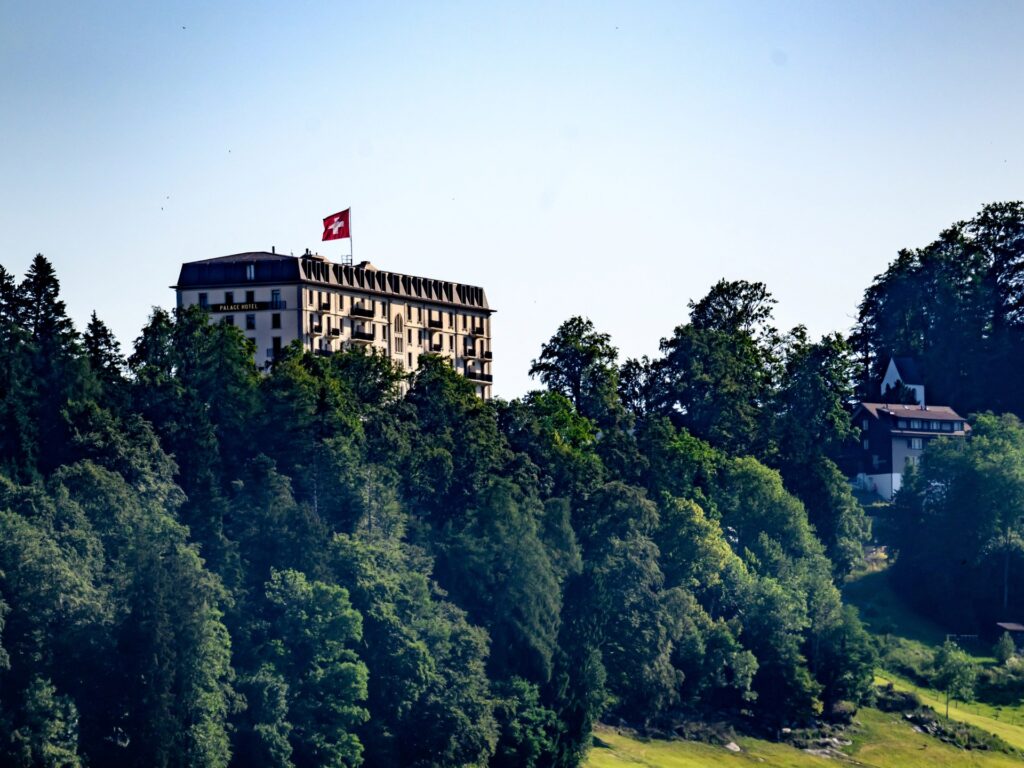
According to Pakistan’s foreign ministry, Pakistani and Qatari mediators will join the US-Iran talks on Sunday in the Swiss mountain resort of Burgenstock.
Reporting from there, Al Jazeera’s Osama bin Javaid said there has been a flurry of behind-the-scenes diplomatic activity ahead of the formal negotiations, with Qatar’s Prime Minister, Sheikh Mohammed bin Abdulrahman bin Jassim Al Thani, already holding meetings. Pakistan’s Foreign Minister, Ishaq Dar, has been holding talks in Egypt and Pakistan’s Interior Minister, Mohsin Naqvi, travelled to Iran.
Iranian foreign ministry spokesman Baghaei has signalled that progress may be scarce until Iran feels the US is living up to its end of the interim deal.
In comments broadcast by Iran’s IRIB, Baghaei said Iran “must naturally be very firm and serious in demanding fulfilment of obligations” considering the US’s past “failure to honour commitments”.
Al Jazeera’s James Bays, reporting from Burgenstock, said there are indications “things are moving backwards from when the MoU was signed”, citing Israel’s continued bombardment of southern Lebanon.
“The Iranians see this as a serious breach of the MoU,” he said. “Their first sanction was by not coming here. They have now utilised their best weapon by closing the Strait of Hormuz.
“Iran believes this tactic will help get things back on track with regard to southern Lebanon,” added Bays.