


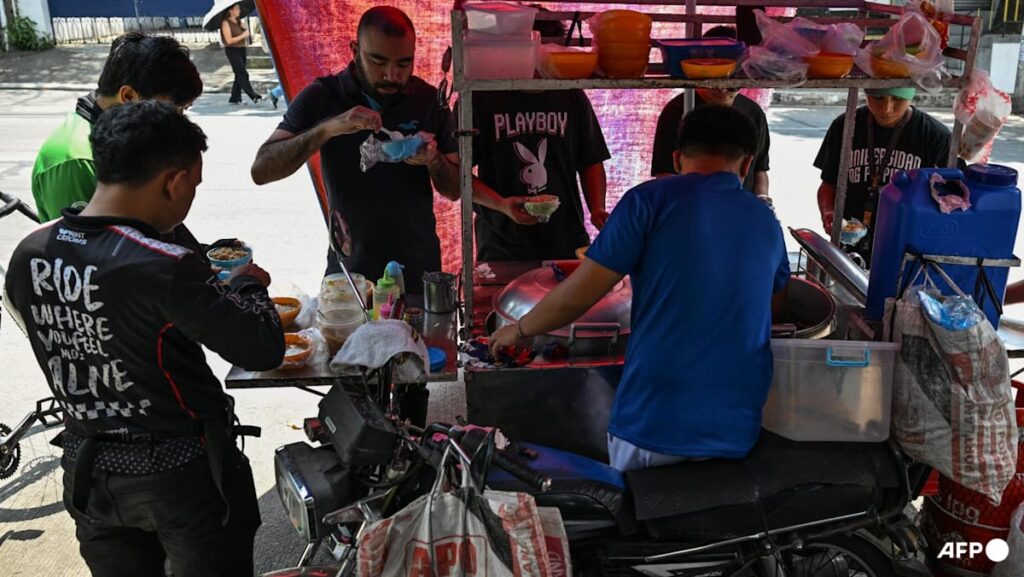
MANILA: Filipinos like their “pares”, a traditional beef stew, served hot – but the soaring cost of liquefied petroleum gas (LPG) has made that prospect increasingly difficult since war erupted in the Middle East.
To save a few pesos, 20-year-old Eric Garcia delicately turned a knob to adjust the flame under his warming trays to the lowest setting as he grapples with fuel costs that have nearly doubled in price.
While sticker shock at petrol stations has garnered the biggest headlines since the war forced the partial closure of the Strait of Hormuz, the rising price of LPG has hit the import-dependent archipelago’s humble street food vendors.
A day before speaking to AFP, Garcia said he had been forced to raise the price of a bowl of pares to 65 pesos (US$1.08) after fuel costs reduced his daily earnings by a quarter.
“I’m only earning 1,500 pesos (per day), because the rest is spent on LPG,” he said.
Garcia, who begins cooking at 3am every morning before hauling his stew to a middle-class neighbourhood on a converted motorbike, said an 11kg tank of fuel, which typically lasts four days, that once cost 870 pesos (US$14.53) now costs 1,600 pesos.
“It’s the highest price of LPG that I’ve ever seen since I started here,” said Carlo Manalad, a supervisor at a store selling tanks of the gas, 90 per cent of which is imported.
“If (our suppliers’) prices are high, we also raise our prices. Our profit is still the same,” the 64-year-old told AFP.