


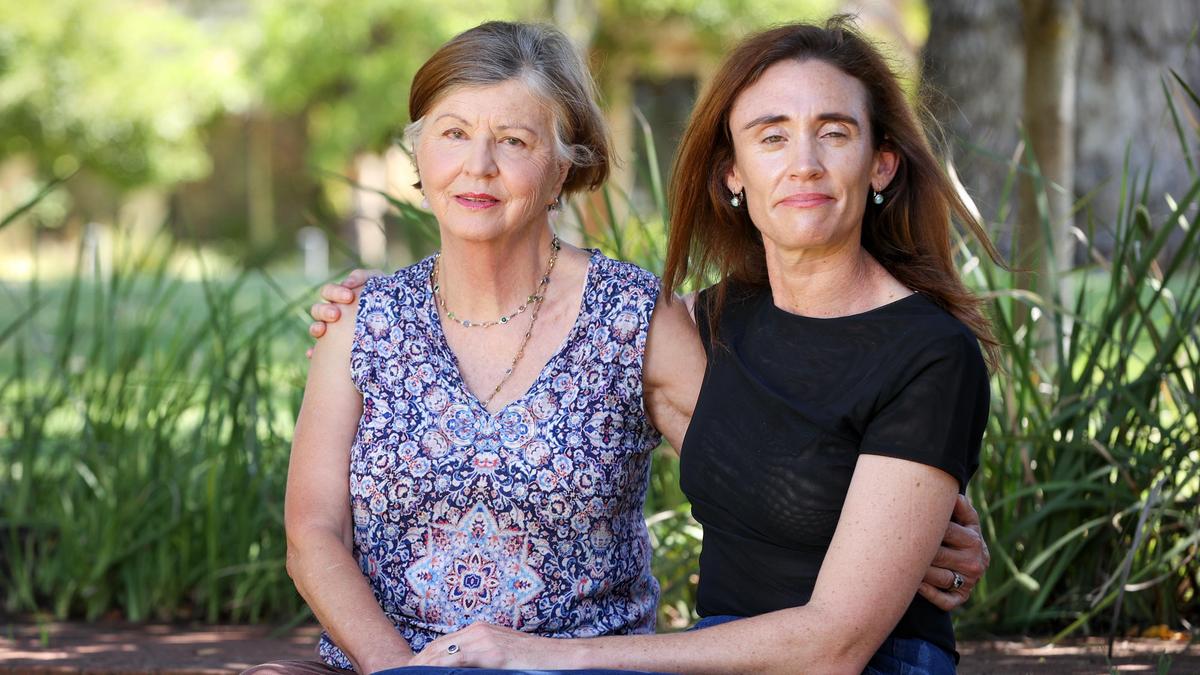
Western suburbs parents caring for children with autism are banding together to demand more education support and inclusion for families living with disabilities.
A new advocacy group, the Western Inclusion Neurodivergence Alliance, says families are struggling due to a lack of specialised learning programs or education support schools for autistic children in the western suburbs.
Group founder and Mt Claremont mother Felicity Creagh said autistic children were being suspended or excluded from mainstream schools, with some families forced to home school and many grappling with school refusal, suicidal ideation and self harm.
The group already has dozens of members and will hold its first meeting next month, with the aim of raising awareness, providing support to families and advocating for more inclusive education.
Ms Creagh has two children with autism and Pathological Demand Avoidance, a condition characterised by an extreme, involuntary need to avoid everyday demands and expectations.

Ms Creagh said her son had been declined entry to a private school in the area due to his PDA. Now 10, he was excluded from daycare when he was three years old. He was diagnosed with autism, and later PDA, when he was seven.
“Some families are driving as far as Hillarys for inclusive schooling. Autistic PDA children can be successful, if they are nurtured in the right environment,” she said.
“We wish to meet with daycare, primary and secondary schools in the western suburbs, and we want them to know our kids are absolutely amazing.”
Ms Creagh said the deaths of Mosman Park brothers Leon and Otis Clune, who had autism, had devastated families in the area.
“We can all relate, because we don’t feel supported or included by the local community,” she said.
PDA, which is recognised as a subtype of autism, involves the pervasive, persistent and extreme avoidance of routine requests.
The condition was recognised in the Federal Government’s landmark autism strategy late last year and was the subject of a major international conference in Perth in November.
“The parents of autistic children need compassion and understanding, (these children) are smart, kind, funny and deserve to be included in education,” Ms Creagh said.
“Ableism and misogyny is rife in relation to children and female parents. For such a long time, these children and adults were considered “bad and lazy”, but we must shift that narrative.”
Shadow education minister Liam Staltari said education support centres were struggling.

“These centres nurture and teach some of the most vulnerable children in WA and yet they have been crying out for help for nine long years now,” he said.
“They need more resources and more support, and we need more services like them – including for children with complex needs in the western suburbs.”
The State Government has pledged to set up a dedicated disability reform unit to improve access and services across public schools after a review of WA’s outdated School Education Act was released last year
The review found no child should be denied enrolment at their local school because of disability.
A spokeswoman for Education Minister Sabine Winton said the Cook Labor Government was “committed to supporting all Western Australian students to have the best possible education, including students with disability.”
She said a 2022 $18.2 million investment had seen WA’s Specialised Learning Programs for students with autism expand to eight additional schools, taking the total to 24.
“Specialist advice and guidance is also available to all public schools through the School of Special Needs: Disability,” she said.
“As part of the 2025-26 State Budget, we allocated an additional $395 million over the forward estimates to support students with disability,” she said.
“This saw over $600 million allocated in 2025 for students with disability – an increase of over $95 million compared to the same time in 2024.
“We have boosted the number of Complex Behaviour Coordinators to 64 FTE across 192 schools such as Floreat Park Primary School to ensure greater support for the students that need it, when they need it.”

