



Published On 15 Jun 2026
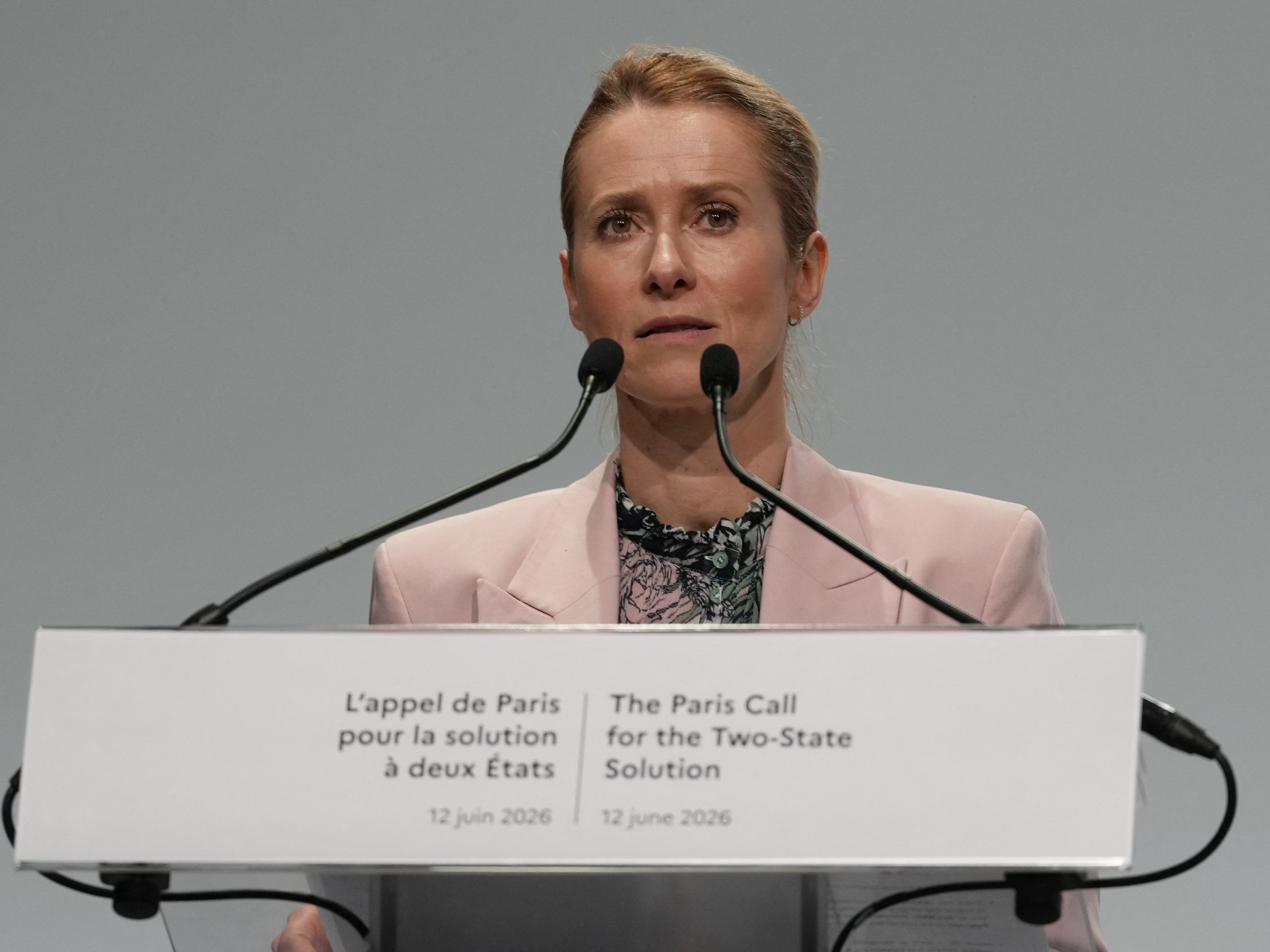
European Union member states have failed to agree on proposals to sanction Israeli National Security Minister Itamar Ben-Gvir, the bloc’s foreign policy chief Kaja Kallas said.
Speaking at a media conference on Monday, Kallas said that while “many” EU states had proposed economic restrictions, “no consensus on that was reached today”.
Recommended Stories
list of 3 itemsend of list
Far-right minister Ben-Gvir has been criticised by several individual EU states for his treatment of activists aboard the Global Sumud Flotilla who were detained by Israeli soldiers as they tried to reach Gaza last month.
However, efforts to impose sanctions on Ben-Gvir at EU level have met resistance. With unanimity required, the bid has failed to win full approval, Kallas said.
The EU’s chief diplomat did not outline which states had refused to agree to the proposal. However, Germany, Austria and the Czech Republic are understood to be among those in opposition.

Kallas added that “many” member states also called for proposals from the EU Commission to prepare options on how to limit trade with illegal settlements across the occupied West Bank.
“I will convey this request and ask the Commission to prepare, ahead of the next Foreign Affairs Council, a list of options for possible trade measures, including measures aimed at preventing imports of goods originating from illegal settlements,” she said.
Last month, the EU moved for the first time to impose economic restrictions on violent settlers responsible for human rights abuses in the West Bank.
Following the raid by Israeli forces on the flotilla, a widely shared video showed Ben-Gvir mocking activists kneeling on the floor with their hands tied behind their backs.
The international outcry saw a number of countries, including Israel’s long-time ally Italy, seek to impose restrictions on the Israeli minister.
Italy has opened an investigation into allegations of kidnapping and torture involving Italian citizens who were among the activists. French prosecutors have launched an investigation into allegations of war crimes and torture.
Those developments came as EU pressure on Israel has grown in recent months. In April, Italy suspended a bilateral defence agreement, while last month the EU moved for the first time to impose economic restrictions on violent settlers accused of human rights abuses in the occupied West Bank.
The EU is Israel’s biggest trading partner, accounting last year for more than 30 percent of Israel’s total trade in goods with the world

