


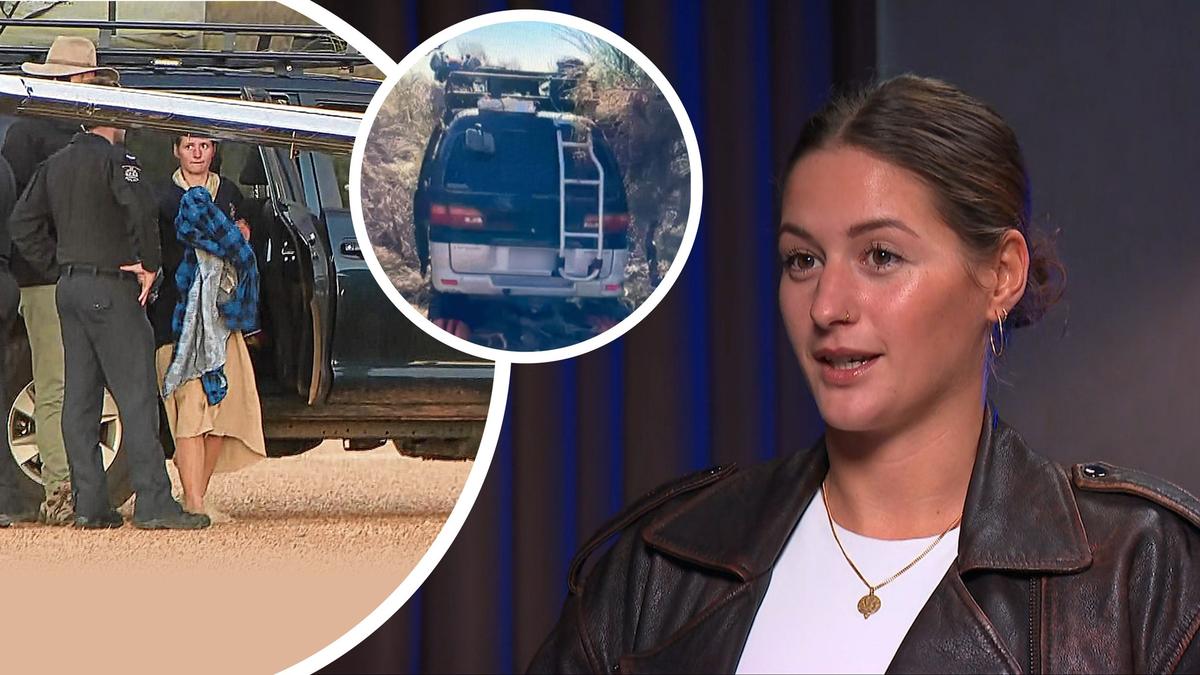
Carolina Wilga, the German backpacker who survived 11 nights alone in remote WA bushland, fully expected she was going to die during her outback ordeal.
Or that she already had and that what she was experiencing while aimlessly wandering within Karroun Hill nature reserve was actually hell, such was her state of mind.
More than 12 months on, Ms Wilga has for the first time shared her unplanned but miraculous story of survival in WA’s Wheatbelt.
It comes as she also releases a tell-all book of her encounter with the WA outback.
In the 7NEWS television interview she is unrecognisable from the malnourished and frostbitten 26-year-old last seen by Australians being ushered onto a WA Police jet on July 11 last year.

While no physical scars of the ordeal remain, her full memory of that ill-fated drive from Perth to Beacon, more than 300km from the capital city, has never completely returned.
“I saw lights coming from in front and it was a car,” she recalled of the moment she crashed her van.
“I got such a weird gut feeling and a crazy feeling of danger. I turned the steering wheel into a fence. It was an irrational moment out of fear.”
In Perth and across the world, fears began to mount for the missing traveller. They only escalated when searchers found her car several days later, bogged and abandoned in the nature reserve.
The aerial images of her Mitsubishi Delica van buried in vegetation near rocky terrain left little room for doubt for people at the time hoping she’d be found alive.
But the question of why she left shelter to face the elements barefoot confounded Australians then, and even her today.

“There was a noise, kind of like an alarm for me, and for me I felt like I have to wake up,” Ms Wilga said.
She then walked, most likely concussed — losing her bearings, her car, and from time to time during the ensuing three days, her will to live.
“I just wanted to make it faster because for me, it was clear I’m going to die but the way I’m dying is super painful and I just wanted to make a cut there to not experience it any longer,” she said plainly, clearly having come to terms with the choice she made.
“It was terribly cold, like freezing cold, but I was still hallucinating. Like the stars were falling down from the sky.”
As bizarre as her recollection sounds, the now-27-year-old is insistent on how “real” what she was seeing felt.

She had no food or water — famously drinking from puddles to gain any sustenance. The only thing she remembers breaking through her fixation on thirst were thoughts of death, and that her family might never see her again.
“They will probably never find my dead body,” Ms Wilga recounted.
“That was the moment I fully broke down because that’s the worst thing for me.”
But her body’s survival instinct and the thought of family kept her going.
“I made my mum a promise that I will walk until I die, that I will not give up, I want to live,” she said.
On the 11th night — just hours before her chance rescue at the hands of local farmer Tarnia Henley — came more nonsensical, yet quite understandable, thoughts.

“One realistic theory of mine is I had already died and this is hell,” she recalled.
Ms Henley was on her way home to Bimbijy Station when she came across the missing backpacker on the side of Mouroubra Road.
“I could not believe it. I was still scared when I was looking at her like, ‘Is this real? Can I be happy?’”, Ms Wilga said of realising she would be rescued.
Yes she could — as evidenced in a video call reunion with Ms Henley during the television interview, where her smile grew wider when she realised who she was speaking with.
The two made light of how the 27-year-old looks far better now than she did last July, before committing to see one another face to face.

