


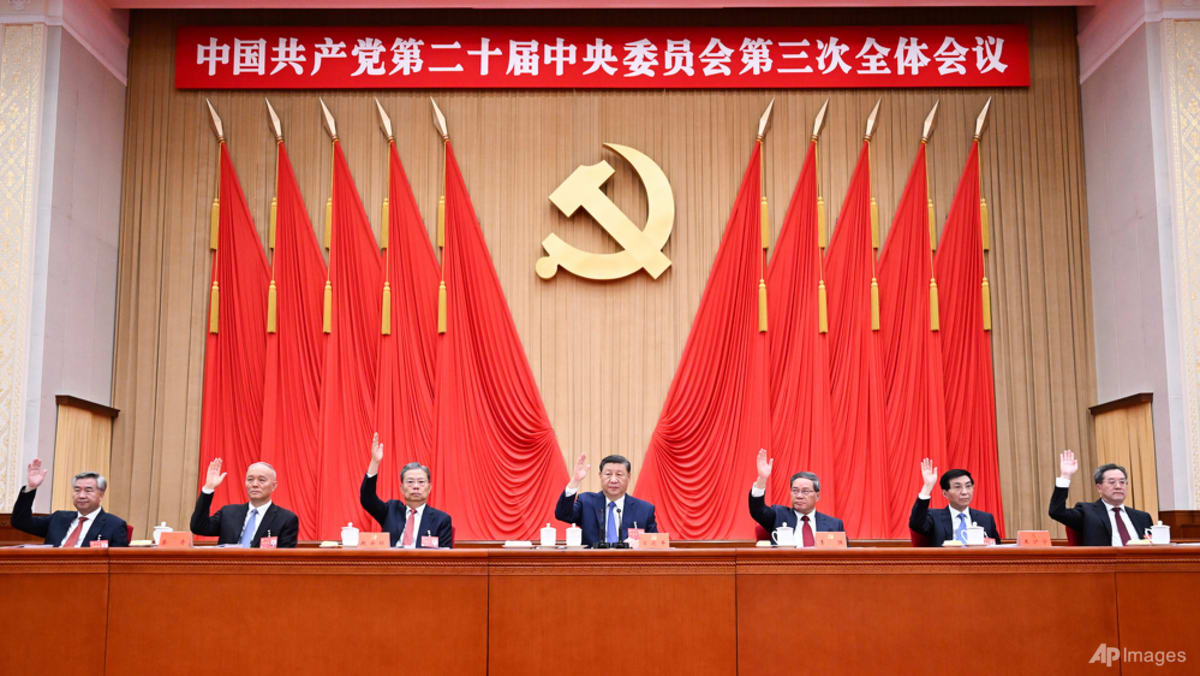
But this time, the traditional sequence has changed.
The fourth plenum in October 2025 already adopted recommendations for China’s 15th Five-Year Plan (2026-2030) – a task usually reserved for the fifth gathering.
Instead, the upcoming meeting will focus on party governance, observers said.
At a meeting held on Sep 21, the Politburo, the ruling party’s elite political body, confirmed that a draft decision on strengthening party self-governance would be submitted to the fifth plenum for deliberation.
Hou Yichao, a researcher on China’s political economy, said plenums play an important role in turning the Party’s broader political direction into concrete policies.
“If the (2027) Party Congress is the meeting where strategy is set and the leadership renewed, the plenums held in between are where specific policy is hammered out over the five-year cycle,” he said.
Why is party discipline taking centre stage?
The fifth plenum’s main agenda is strengthening what Beijing calls “full and rigorous party self-governance” – a sweeping concept that extends beyond fighting corruption to how officials are supervised, assessed and held accountable.
Hou described it as “core engineering work on how power itself operates” – noting that Xi has outlined five systems underpinning strict party governance – covering organisation, education, supervision, institutions and accountability.
“Together, these speak to whether directives from the centre are actually carried out, whether political education is effective, how oversight and anti-corruption work is conducted,” Hou said.
They also cover whether internal party rules are effective and whether party-building requirements are implemented throughout the organisation, he added.

