


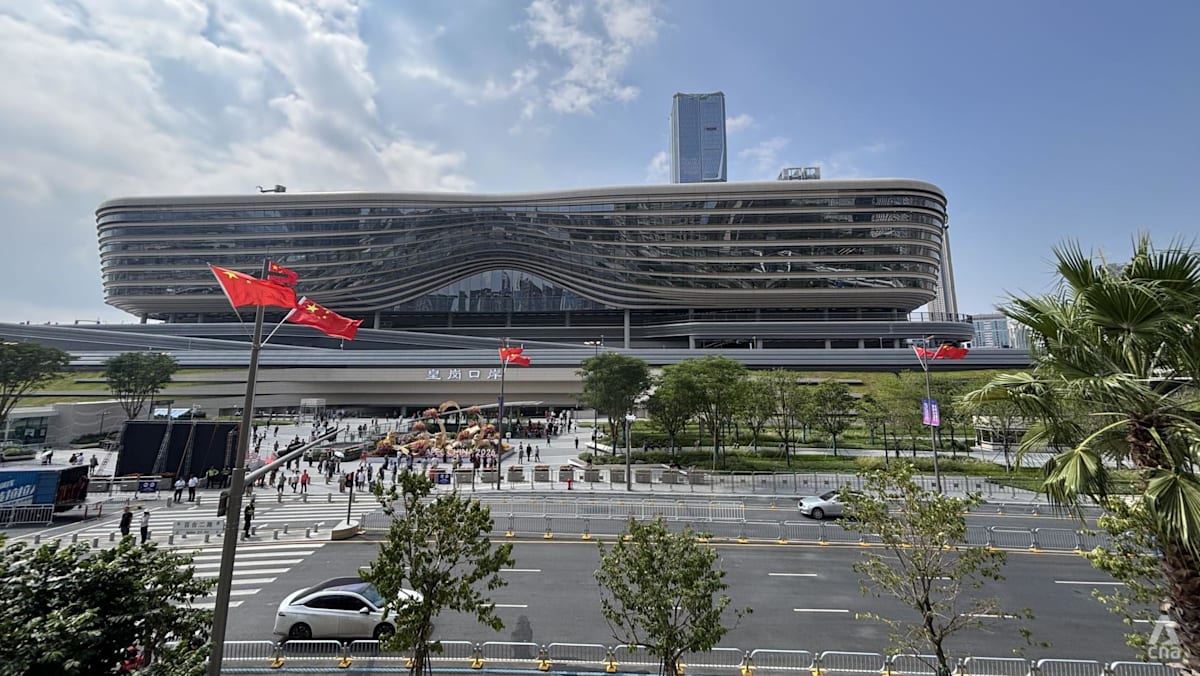
For drivers, the clearance time is expected to be cut from 10 minutes to two minutes, the South China Morning Post reported.
Hong Kong’s Customs and Excise Department has introduced a “joint one-stop” system where departing vehicles undergo an initial customs risk assessment before entering the newly designed three-gate vehicle lanes.
The lanes are equipped with “integrated information collection devices” that simultaneously conduct body temperature checks, document scans and biometric data collection.
Vehicle drivers only need to present a single identity document to complete the “five-party inspection”, without having to leave their vehicles.
The data is collected by five agencies, including the immigration and customs agencies of both Hong Kong and Shenzhen and the Hong Kong Department of Health.
How do travellers get to Huanggang Port?
Travellers from Hong Kong can get to Huanggang Port via franchised bus services, green minibuses, cross-border coaches and taxis.
However, due to space constraints, no public car parks are available at the port.
For travellers in Shenzhen, public transport options from Huanggang Port include Shenzhen Metro’s Line 7, taxis and buses.
According to South China Morning Post, a high-speed intercity railway linking Shenzhen, Guangzhou and Dongguan will be connected to the new Huanggang Port in the future.
Currently, the redeveloped Huanggang Port is expected to handle about 200,000 passenger trips per day. However, this may be increased to about 300,000, with the commissioning of the Northern Link Spur Line by Hong Kong’s MTR Corporation.
According to MTR, the main Northern Link line will connect the existing East Rail Line and the Tuen Ma Line in Hong Kong, forming a railway loop in the northern New Territories.
Meanwhile, the Spur Line will provide direct connections between Hong Kong and Shenzhen – from the planned San Tin station in Lok Ma Chau to the revamped Huanggang Port.

