


CLIMATE-VULNERABLE COUNTRIES
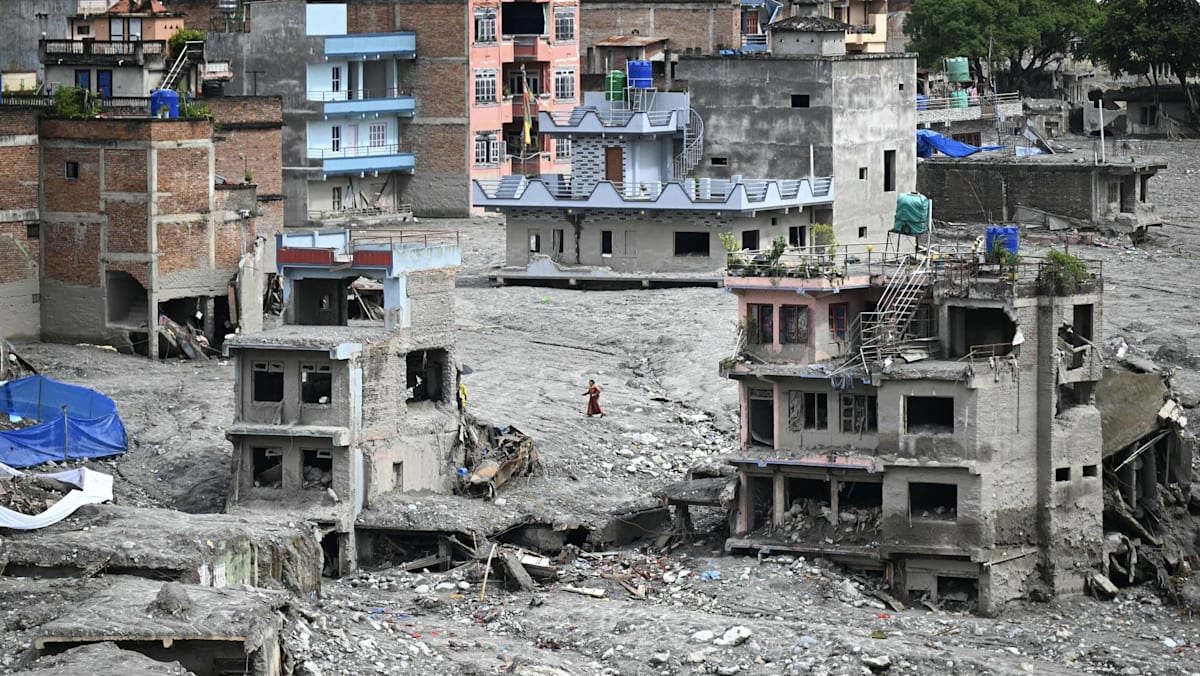
For a landlocked developing country like Nepal, climate shocks set back already very low levels of human development.
According to United Nations data, landlocked developing countries face double the freight rates for transporting goods compared to coastal states. When disasters damage roads and bridges, these costs can rapidly escalate making sustained recovery much harder.
The UN estimates that for least developed countries, disaster losses amount to about 1 per cent of gross domestic product, much higher than the global average of 0.3 per cent of GDP.
In some cases, the losses can completely overwhelm the economy: Hurricane Maria in 2017 caused losses of 226 per cent of Dominica’s GDP.
In 2022, the Vulnerable Twenty – a bloc representing climate-vulnerable nations – estimated that climate change led to cumulative losses of US$525 billion for its members from 2000 to 2019.
CLIMATE COMPENSATION IS UNLIKELY
Despite rising sophistication of attribution science, which pinpoints the degree to which climate change is responsible for extreme weather events, demands from climate-vulnerable countries for compensation are unlikely to yield outcomes soon.
In July 2025, the International Court of Justice delivered a unanimous finding that states had binding obligations under international law, the UNFCCC and the Paris Agreement to prevent significant harm to the climate system.
However, the ICJ ruling is advisory and does not obligate developed countries or major emitters to provide additional resources. Developed countries have strongly pushed back against linking payments for loss and damage to any kind of legal liability for their historical responsibility in emitting greenhouse gases.

