


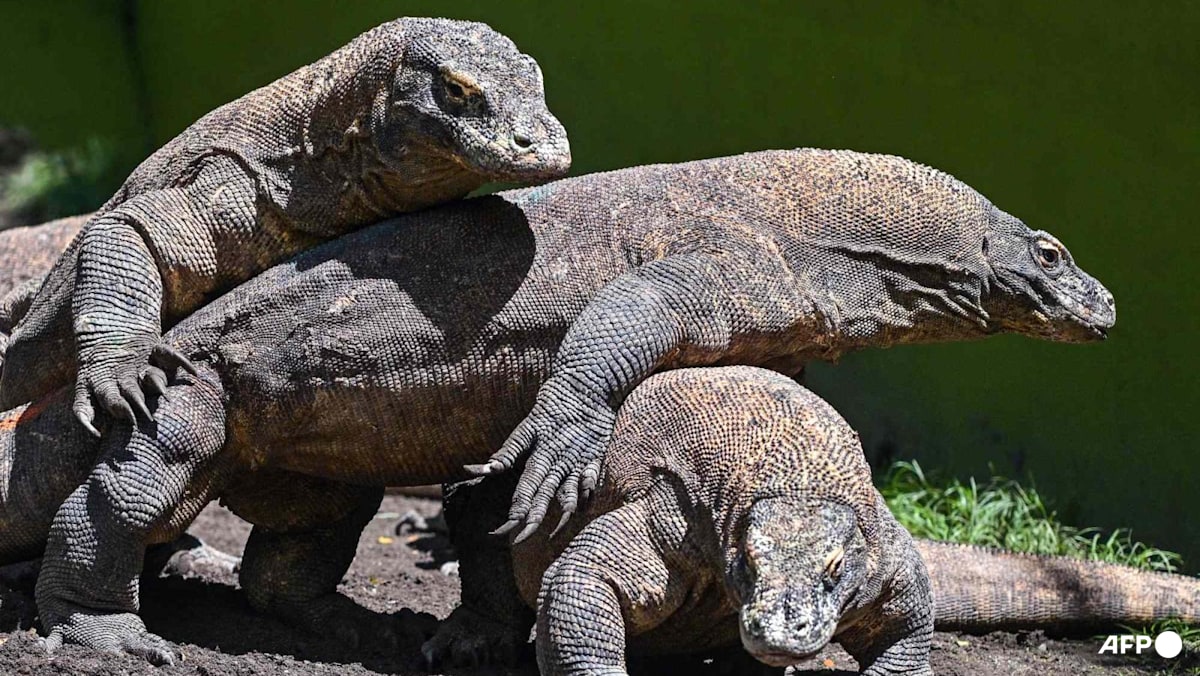
The zoo in Surabaya, Indonesia’s second-largest city, over 700km from the dragon’s natural habitat, has bred dozens of the dragons in recent years in conditions that mimic their natural home.
In the wild, the world’s largest living lizards are found only in the World Heritage-listed Komodo National Park and on neighbouring Flores island.
According to the International Union for Protection of Nature, the global population was about 3,458 adult and juvenile Komodo dragons at the last count in 2019.
The fearsome reptiles, which can grow to 3m in length and weigh up to 90kg, are threatened by human activity and climate change destroying their habitat.
In some places, they are losing natural prey to human hunters, and they sometimes die in conflict with humans over livestock.
Some are captured and illicitly traded to zoos or as pets.
There have been legal transfers of Komodos to other zoos in the past, including London and Singapore.
The Indonesian and Japanese governments signed a Memorandum of Understanding last month to make the exchange with Japan possible.

