


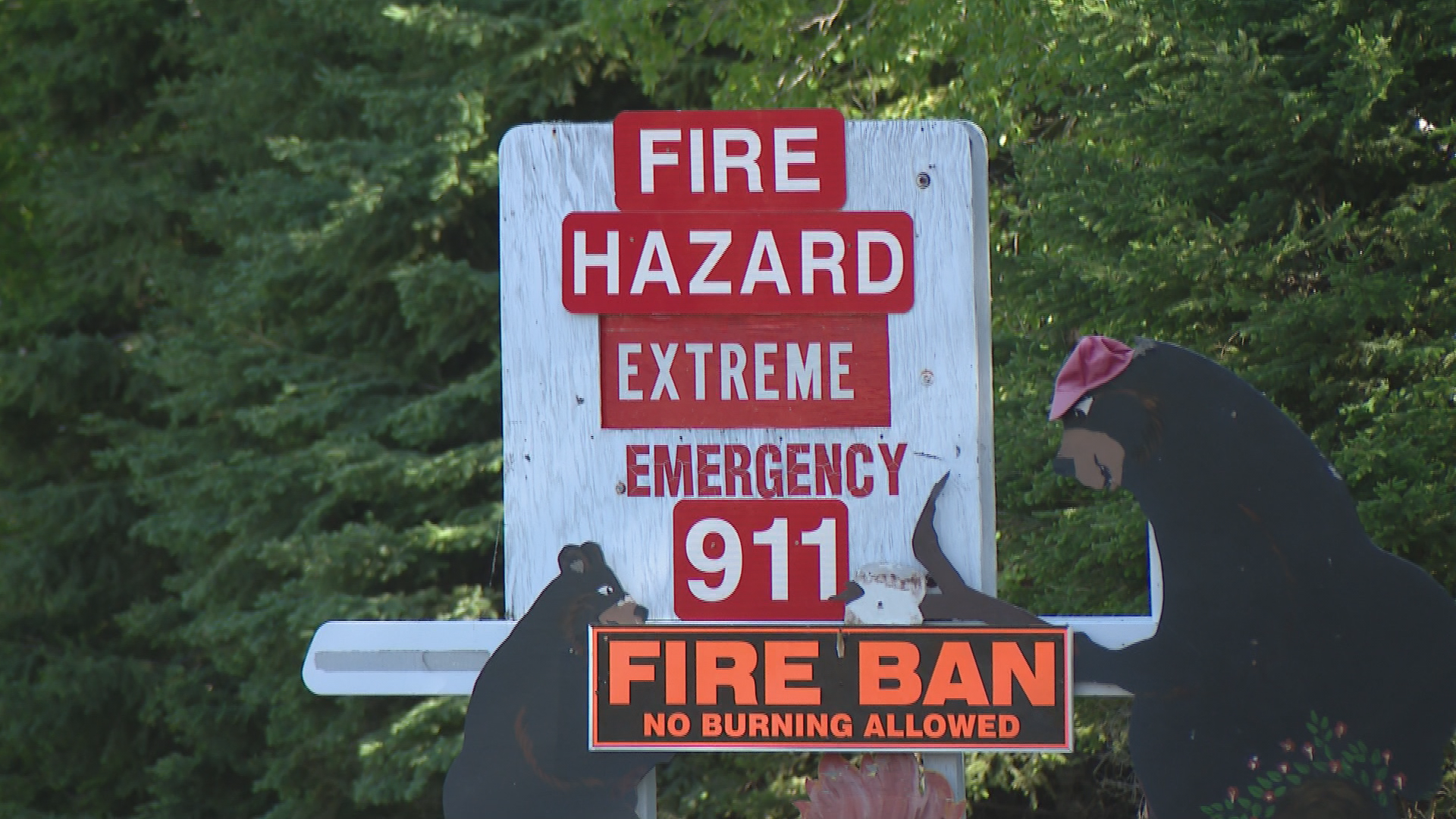
The fire chief of a village in central Saskatchewan that battled blazes last year says a new fire grant announced by the province is not sufficient to meet the needs of his community.

The FireSmart Grant Program was announced last week by the Saskatchewan Public Safety Agency (SPSA) and aims to provide $40,000 to communities to obtain a FireSmart designation, which recognizes communities that have taken proactive measures to prepare for fires.
But Jim Arnold, chief of the volunteer fire department in Candle Lake, Sask., a village located over two hours northeast of Saskatoon, says his community has been waiting for compensation for its fire-protective measures and that the funding in the grant is not enough.
“$40,000 is a drop in the bucket,” said Arnold, adding his community has more than 2,700 properties that required protection, with the protection process taking three days, 20 fire department members and outside resources from the village and the province’s search and rescue team.
“Candle Lake spent $140,000 on FireSmarting the community, and we have not received any compensation from SPSA to date.”
The grant program is one of eleven initiatives announced by the SPSA in response to the same number of recommendations outlined in an independent report on the province’s 2025 wildfire response commissioned by the province last fall.
Other immediate actions announced by the SPSA include enhancing communication, introducing a simplified five-year procurement process for local vendors, and undertaking post-incident reviews that involve impacted communities.

Get breaking National news
Get breaking Canada news delivered to your inbox as it happens so you won’t miss a trending story.
No timelines or dollar values have been assigned to these action items at this time, but Michael Weger, the minister responsible for the SPSA, told reporters Friday that he believes they can be “put into effect very quickly.”
The community of Wadin Bay, Sask., will be the first to receive the $40,000 FireSmart grant retroactively for costs associated with its wildfire mitigation practices.

The action items proposed in response to the independent review are being well received by residents of Denare Beach, Sask., which was devastated by last year’s wildfires, said Karen Thomson, the village’s deputy mayor.
“It really did lay bare a lot of things that we’ve been saying for the last year,” Thomson told Global News in an interview.
Thomson says she hopes to see communication between the SPSA and her community members improve after calls of concern from local residents went unanswered by the agency, leading to widespread evacuations and the destruction of nearly 400 homes.
“Local knowledge is a big piece because people know the forest, they know the lay of the land. So it’s important to take their advice when it’s given,” she said.
Meanwhile, Thomson welcomes the FireSmarting grant initiative, which is already in place in her village, but says more needs to be done on mitigation.
“You can protect the community within, but it’s important to protect the community from the perimeter as well.”
The independent report conducted by accounting firm MNP outlines “significant gaps” in prevention and mitigation strategies by the SPSA last year, with land treatment targets not grounded in wildfire risk or science.
The review says it found SPSA’s prevention and mitigation activities align with a 2017 Prairie resilience framework, with a target of treating just over 2,400 hectares of Crown land near communities by 2028, but that it could not determine how the target was made, “nor do the targets appear to be grounded in an assessment of accumulated wildfire risk or fire science.”
For one forest advocate, the new action items do not put enough focus on preventative measures.
“A lot of opportunity is lost when you’re not focusing on preventative actions. There’s a lot good, healthy forest management practices that could help forces to be more resilient to wildfires,” said Carl Neggers, CEO of Forest Saskatchewan.
Neggers says he is meeting with the ministries of public safety and environment on June 30 to bring forward his concerns on items that need to be addressed immediately.
“Currently, the board of SPSA is populated with cabinet ministers, and we think that needs to be expanded under recommendation one. We think that the industry should be a part of that board,” Neggers said.
The 2025 Saskatchewan wildfire season was the second worst on record, with more than 500 wildfires burning over 2.9 million hectares and causing the evacuation of over 10,000 people.
© 2026 Global News, a division of Corus Entertainment Inc.

