


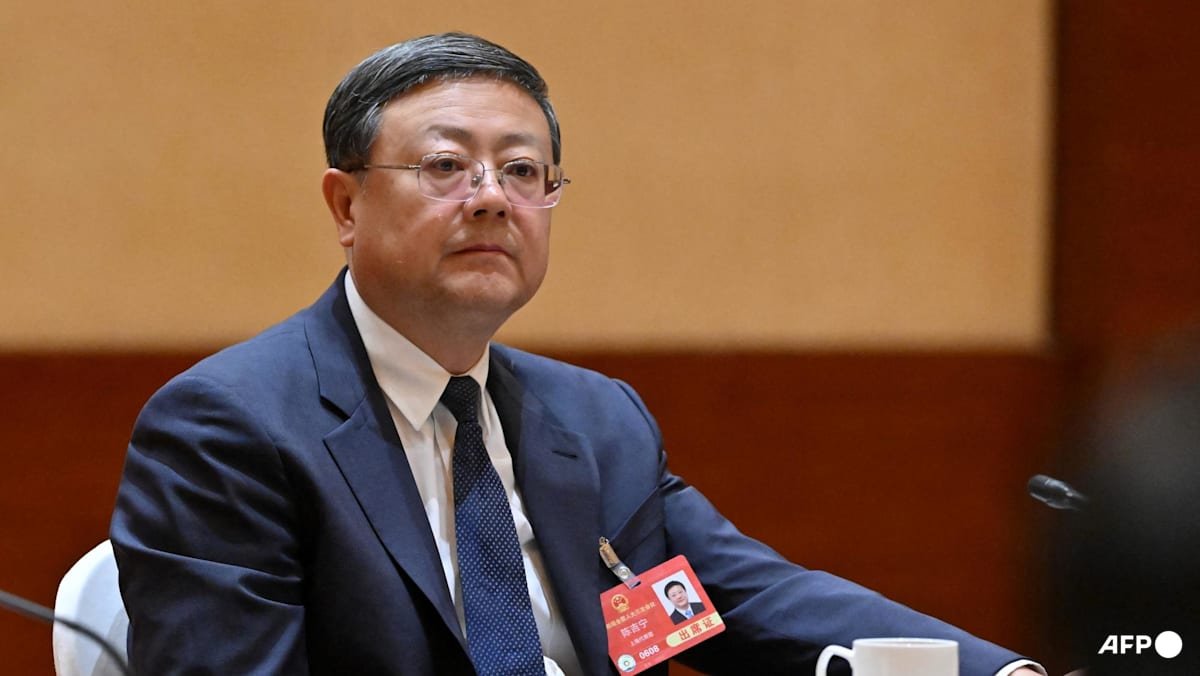
Kam raised similar concerns about Shanghai, where officials are expected to pursue innovation in finance and technology despite anti-corruption investigations involving regulators and banks responsible for approving such initiatives.
“This might lead officials to become more risk-averse,” she said.
Tseng of National Chengchi University also warned that tighter scrutiny could weaken government-business relations, which have traditionally played an important role in local economic development and policy implementation.
“Although such relationships can give rise to corruption, good government-business ties were previously regarded as a major driving force behind China’s rapid economic growth,” he said.
“Now, excessively close government-business networks are regarded as taboo. This will certainly affect policy implementation.”
THE STAKES AHEAD OF THE PARTY CONGRESS
Chen’s investigation has added uncertainty to personnel arrangements for the next leadership term, analysts said, with less than a year to go before the 21st Communist Party Congress, a five-yearly gathering when China’s top leadership lineup is unveiled.
Hong of Tamkang University said Chen had been widely regarded as a potential candidate for the Politburo Standing Committee in 2027, with some even viewing him as a possible successor to Premier Li.
“This time, the investigation has reached someone Xi was preparing for the next leadership term,” he said.

