


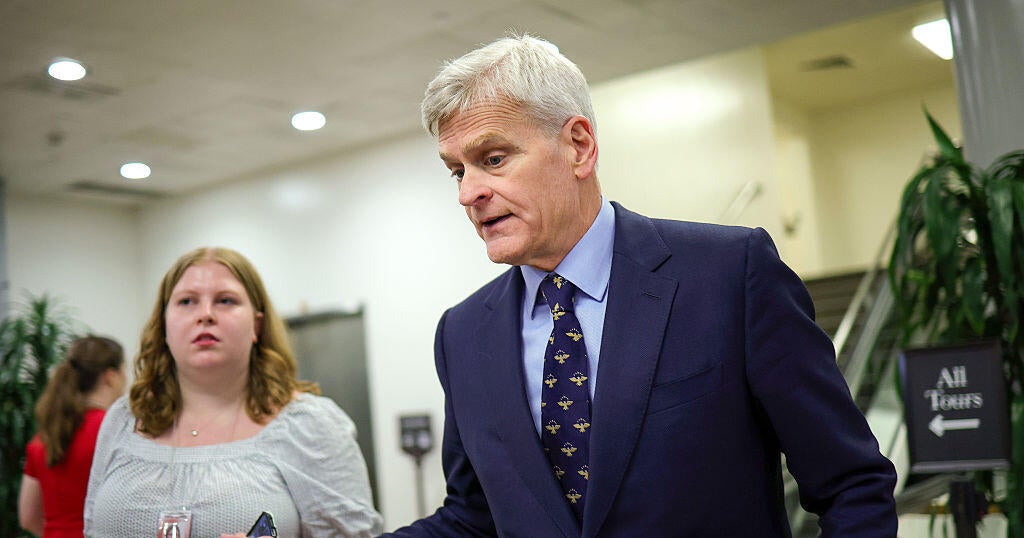
Washington — Republican Sen. Bill Cassidy of Louisiana, who recently lost his primary after President Trump backed one of his opponents, took several digs at the president — without naming him — as he called for “a renewed sense of unity” in politics.
“Americans are hungry for a politics that solves problems. To achieve this, loyalty must first be to country, Constitution, and fellow Americans, not to individuals,” Cassidy wrote in an essay published Wednesday on X.
Cassidy called for leaders who are “steady, not erratic” and “thoughtful, not impulsive.”
“Their words should lower the temperature rather than inflame division. Their actions should place the long-term interests of the country above short-term political or personal gain. Leadership is not using power to serve your own needs; it is using power to serve the needs of others. If someone does not understand this, they should not hold a position of leadership,” he wrote.
Mr. Trump lashed out at Cassidy — who was one of seven Republican senators who voted to convict him in his impeachment trial after the Jan. 6, 2021, attack on the Capitol — ahead of Saturday’s primary. Citing the impeachment vote, Mr. Trump called Cassidy a “disloyal disaster” and “sleazebag” as he urged voters to support his preferred candidate, Rep. Julia Letlow.
Cassidy, a medical doctor, has also clashed with the administration over its vaccine policies and other health policies.
Days after his primary defeat, Cassidy voted to advance a war powers resolution to limit Mr. Trump’s ability to take further military action against Iran without congressional approval. The vote marked the first time the Louisiana Republican had voted in favor of such a resolution.
“Americans are exhausted by a culture that treats every disagreement as betrayal,” Cassidy wrote.
“Our constitutional system was designed around debate, persuasion, and compromise,” he said. “Ronald Reagan famously said that someone who agrees with you 80 percent of the time is a friend and ally, not an enemy. That philosophy helped build one of the most successful political coalitions in modern American history because it welcomed people into a movement instead of driving them away.”
He also said his call for unity applies to U.S. relations with its foreign allies, saying they “need confidence that the United States approaches alliances with seriousness, steadiness, and mutual respect.”
“Short-term displays of dominance or public humiliation of allied leaders may create momentary political satisfaction, but they weaken the trust and cooperation needed to achieve long-term strategic goals,” he said. “Successful alliances depend upon credibility, reliability, and shared purpose.”

