


MEMORIES AND DUST
Greenland is confronting the challenge of keeping its remote communities – whose identities are deeply tied to nature – alive in a time where nothing is as it once was.
Locals do not need to read scientific data to understand the shifts.
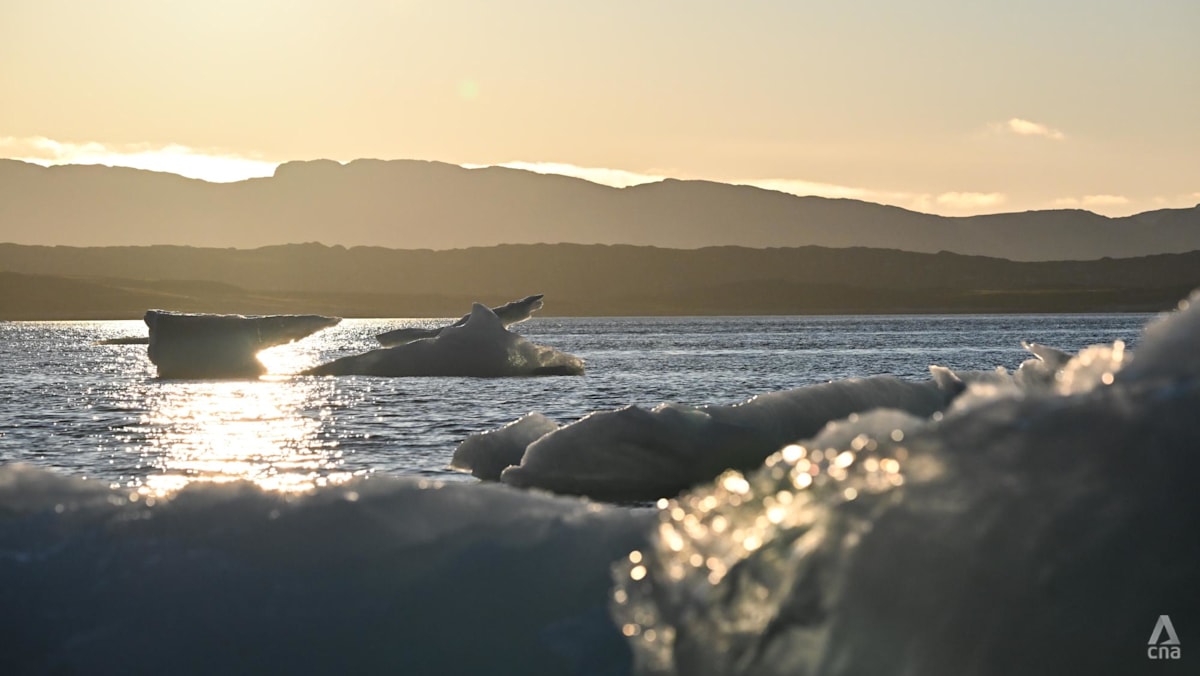
Hanserak Olsen the fisherman described days in the past where ocean ice would form for months in the fjord in front of his village. For most of the year now, that same harbour is accessible by boat.
“We have less ice in the winter time. Normally, when I was young, we could go by dog sled all the way to the town. Today it’s nearly impossible,” he said.
Further north, outside the city of Sisimiut, a summer snowstorm briefly turns the Arctic Circle Trail white. The famous route leads 160km inland towards the Greenland ice sheet, through a landscape increasingly shaped by unpredictable conditions.
Marinus Hurni Christensen, who runs adventure tours through Hotel Søma, described unusual winter periods leading to dry riverbeds and wildfires lighting up the remote tundra.
A lack of snowfall through the winter not only caused him to cancel trips but also brought about a sense of communal gloom through long periods of darkness, he said.
“Even though it’s dark here, the light we do get is greatly reflected by the snow, even the moonlight and the stars. Everything shines,” he said.
“If you remove the snow, then it’s pure, complete, Arctic darkness. People get depressed, anxious and just a bit more sad in general.”

