


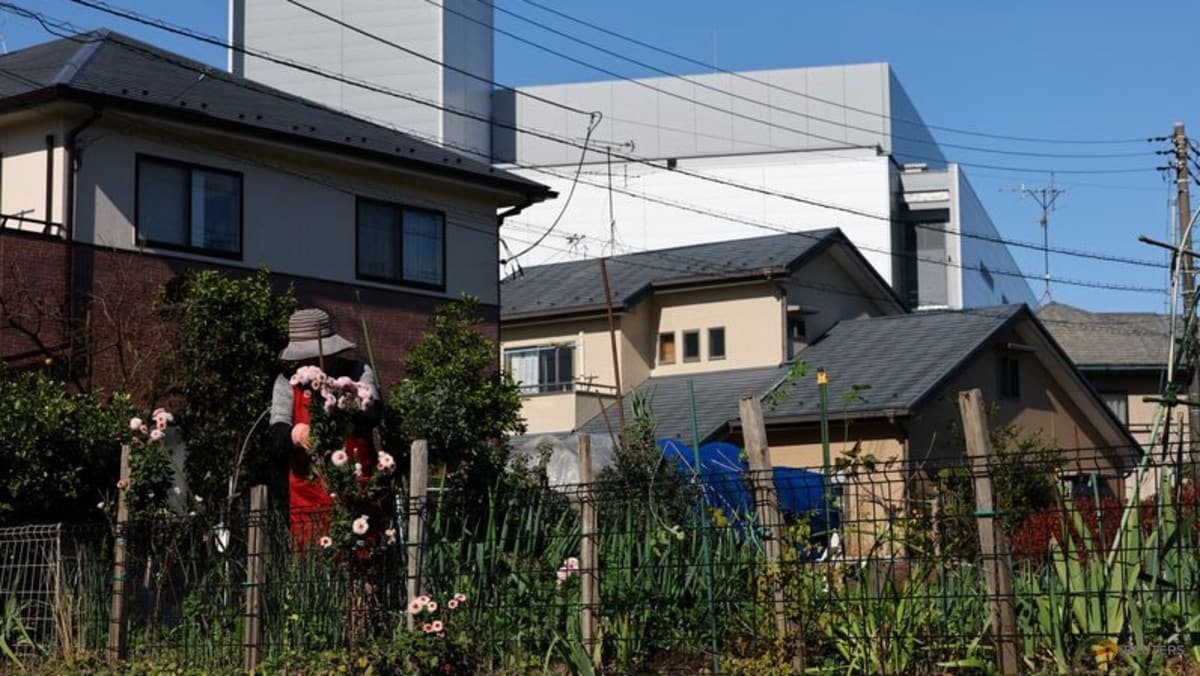
TOO CLOSE FOR COMFORT
On a recent afternoon, six backup generators facing Goto’s house fired up for a test run, belching out black smoke and hot air, with a jet-engine-like whine.
“I can’t stand the noise, so I close the windows or leave the house to escape it,” the 76-year-old said, looking out from his second-floor window. Exhaust settles on his laundry, he said, and the smell can be overpowering.
Goto’s plea to the city to push the developer to locate the underground fuel tanks towards the middle of the roughly 10-hectare site, farther from homes, went nowhere. The data centres sit among hundreds of houses, some farmland and a baseball field.
The generators are tested whenever a new tenant moves in, and over the past two months they ran for some 110 hours combined. Two more data centres are planned, meaning the tests will only multiply.
“As long as this continues, I’ll keep fighting to protect our living situation, maybe until the day I die,” Goto said.
Asked whether proximity to residential areas was considered when selecting a site, PAG said: “We carefully consider numerous factors … including local environmental and community impact, and we work with city, prefectural and community leaders to understand their views before work commences.”
PAG said it meets monthly with residents and that it had taken steps to address concerns, including erecting sound barriers and curtailing the hours of generator testing.
“(We) will continue to engage with residents to address their concerns,” it said.
FIGHTING IT IN COURT
In Inzai city, between Tokyo and Narita airport, Junichi Takeda and fellow residents are going a step further by taking their issue to court.
Britain’s Colt Data Centre Services began construction this year on a 32-megawatt facility that will rise directly in front of Takeda’s apartment 11 metres away, blocking the view from his spacious balcony.
Takeda and fellow plaintiffs are suing the city and Japan ERI, a government-authorised building inspection and certification company, arguing the project was wrongly permitted as an office rather than a factory or warehouse – a classification that would have barred construction there.
“Japan hasn’t established the proper laws,” said their lawyer, Satoshi Oikawa. “That’s why you’re seeing huge data centres being planned in residential areas or in front of train stations. That’s threatening people’s lives and their rights. It’s a big problem.”
Inzai city and Japan ERI declined to comment because the cases are ongoing.
Campaigners say the Inzai case could set a precedent for how – or whether – Japanese courts will police the office-zoning loophole developers have used nationwide. For now, residents are scrambling to raise awareness among the broader public with a simple warning: your community could be next.

