


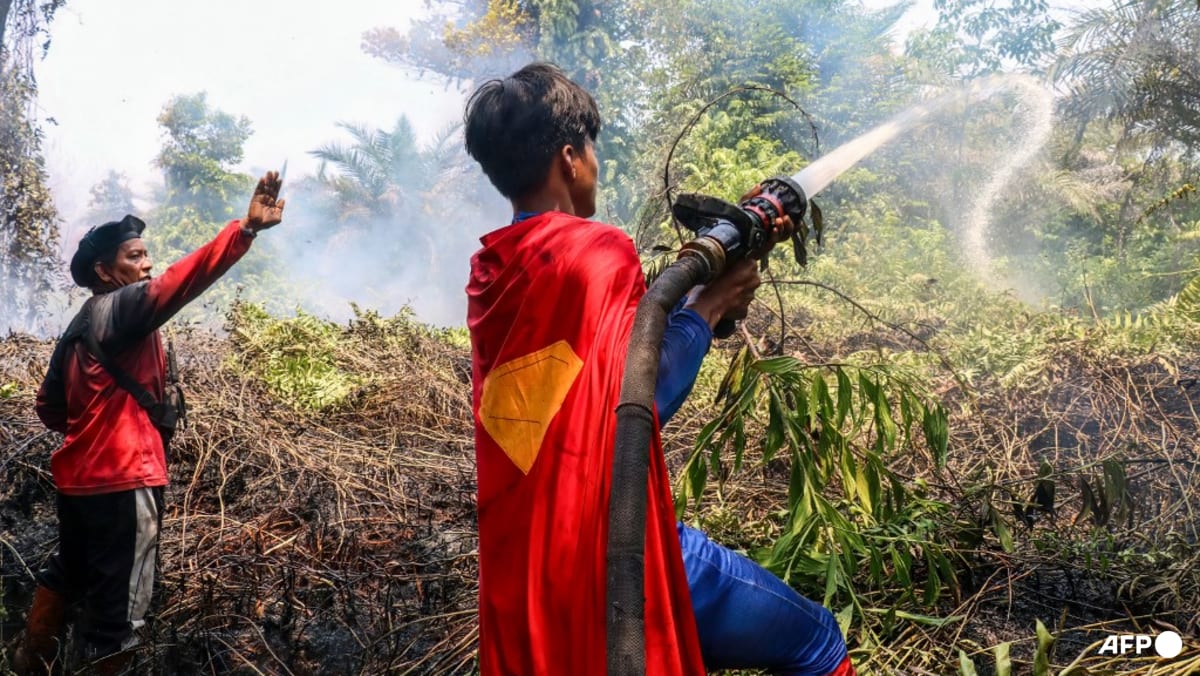
“NORMAL KID”
His father, Mulyadi, told AFP the haze from this year’s fire season was the worst his volunteer firefighter group had seen since it was established in 2020.
“In the house, he’s like a normal kid,” he said when asked about his cape-clad son.
“But when he saw me going out, he asked, ‘Are you going to put out fires? I’ll go with you,'” he said.
The lack of water was the main challenge for firefighters, Mulyadi said, with wells and other water sources drying up during drought.
Fires between January and July burned more than 200,000 hectares of land – an area three times the size of the capital Jakarta, the government said this week.
That is already larger than during previous El Nino seasons – a weather pattern that triggers worldwide changes in winds, atmospheric pressure and rainfall – in 2019 and 2023.
The government has ordered more troop and aircraft deployments to help contain the spread of the blazes and smog, which has reached Malaysia.
El Nino is a naturally occurring climate phenomenon that typically brings drought, which increased the risks of wildfires, in Indonesia.
Human-caused climate change can amplify its impacts because a warmer ocean and atmosphere make more energy and moisture available to feed extreme weather events.
Rudiyansah, who dreams of becoming a forest ranger someday, called on firefighters to carry on despite the challenges in putting out the fires.
“To volunteers and firefighters across Indonesia, keep up the spirit in the fight against the flames,” he said.

