


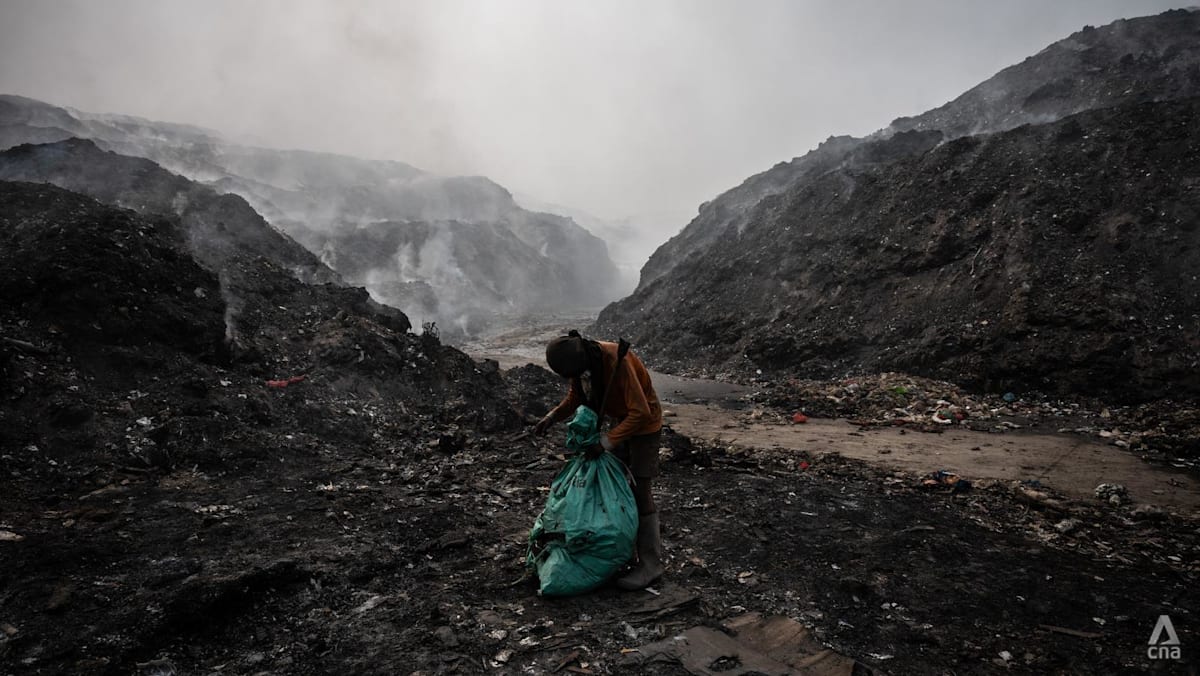
And once the smallest spark reaches a landfill, the conditions are ideal for a major fire.
Decomposition of organic materials produces methane, a highly flammable and potent greenhouse gas, Mahawan said, while heat from extreme weather dries out the waste and lowers the ignition point of combustible materials.
“Which is why they can ignite, spread easily and keep smoldering beneath the surface which makes detecting, let alone extinguishing, such fire difficult,” he said.
“As long as methane continues to be produced in open dumps, with organic waste mixed together with other types of rubbish, fires like this are not merely a possibility — they are inevitable,” said Wahyu Eka Styawan of environmental advocacy group Walhi.
OPEN DUMPING RAISES FIRE RISK
According to the Environment Ministry, more than 340 of Indonesia’s 550 landfills still rely on open dumping despite a government ban on the practice since 2013.
Jatiwaringin had already been singled out by the ministry for its poor management.
In May 2025, regulators ordered the landfill to close temporarily after finding it was still operating as an open dumpsite, allowing untreated leachate to seep into the ground and failing to stop open burning — a practice sometimes used by scavengers to strip rubber insulation from electrical cables to recover valuable metal.
The dumpsite was allowed to reopen in December after the Tangerang regency government pledged to gradually convert it into a controlled landfill, where waste is compacted and covered with layers of soil every few days to reduce the risk of fires, odour and methane emissions.

