


The roots of the current crisis lie in Negeri Sembilan’s unique adat perpatih system, a matrilineal tradition originating from the Minangkabau highlands of West Sumatra, Indonesia.
Unlike eight other Malaysian states with hereditary monarchies, the Yang di-Pertuan Besar or the ruler in Negeri Sembilan is elected by the four undangs – or territorial chiefs – rather than inherited through direct lineage.
Among practitioners of adat perpatih, there are differing interpretations of the customs, raising questions of the validity of procedures to appoint individuals to these royal positions and therefore the legitimacy of those who occupy them.
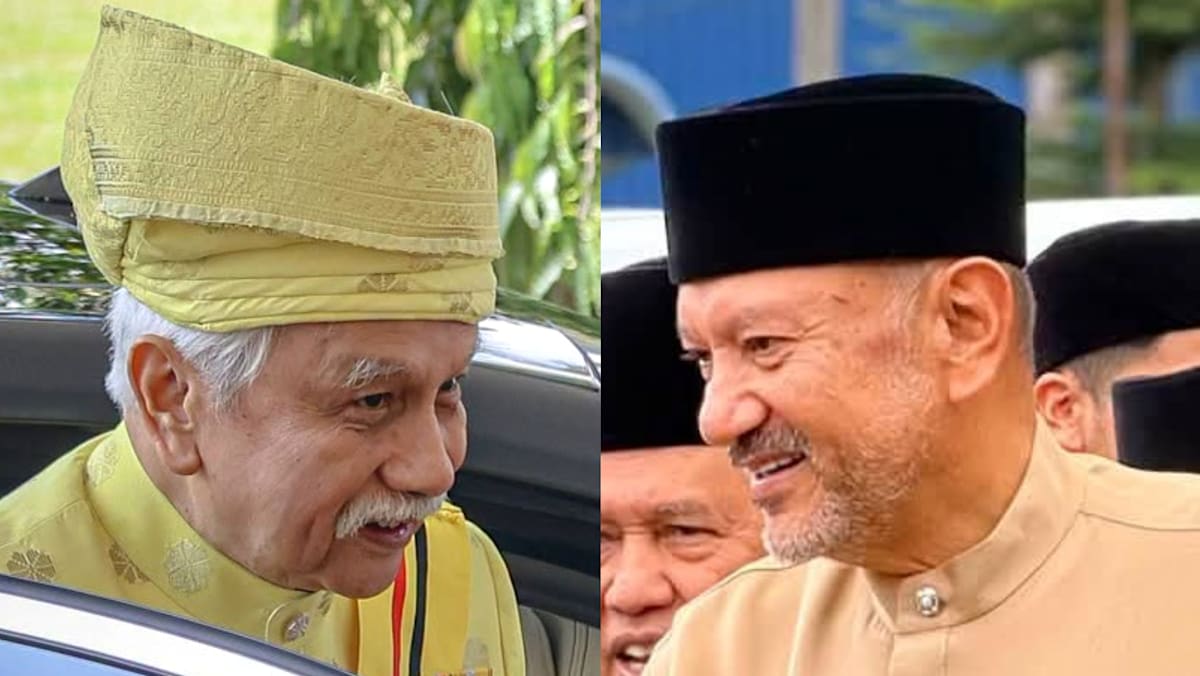
Local Rembau customary leader Abdul Razak Mohd Yassin, who holds the territory’s second-highest rank just below the undang, insists that Rahim Yasin – who was installed in August 2024 – remains the legitimate undang of Rembau.
In July last year, the DKU officially recognised Rahim as the 22nd undang of Rembau, although he was not proclaimed to the position by the ruler Tuanku Muhriz.
This position was contested on Jun 27, when the ruler officially proclaimed Hassan Ab Hamid the undang of Rembau instead.
Abdul Razak questioned the motives behind what he claimed were the rapid appointments of replacement undangs and if they were moves to consolidate power within the palace.
“The overall situation in Negeri Sembilan is heartbreaking and sad. This is not following the customs, which are being made a mockery of,” he told CNA, as he showed a plaque bearing Rahim’s name as the 22nd undang at the Rembau Territorial Chief’s Office.
He also claimed the dismissal of Tuanku Muhriz was valid and did not violate any constitutional or customary mandates.
Not everyone agrees. Universiti Kebangsaan Malaysia legal expert Noor Aziah Awal, who is from Negeri Sembilan, believes the undangs failed to follow due process in their attempt to depose Tuanku Muhriz.
While Article 10 of the state constitution allows the undangs to request a ruler’s abdication, such actions demand strict compliance with both traditional and legal procedures, she said.
The chief minister was neither invited to the proceedings nor a signatory to the declaration, and the ruler was denied a proper opportunity to defend himself, she noted.
She supports the decision to dismiss the dissident chieftains and appoint new undangs.
“It is very important for whoever is elected as chief minister of the next Negeri Sembilan government to seek out (Tuanku) Muhriz and move on from there,” she said.
Aziah also explained that the undangs are elected by the lembaga (tribal chiefs) who oversee specific tribes within the territory, and they are in turn elected by the buapak or clan chiefs who serve as the smallest units of traditional administration.
“It is a pyramid structure,” she said.

