


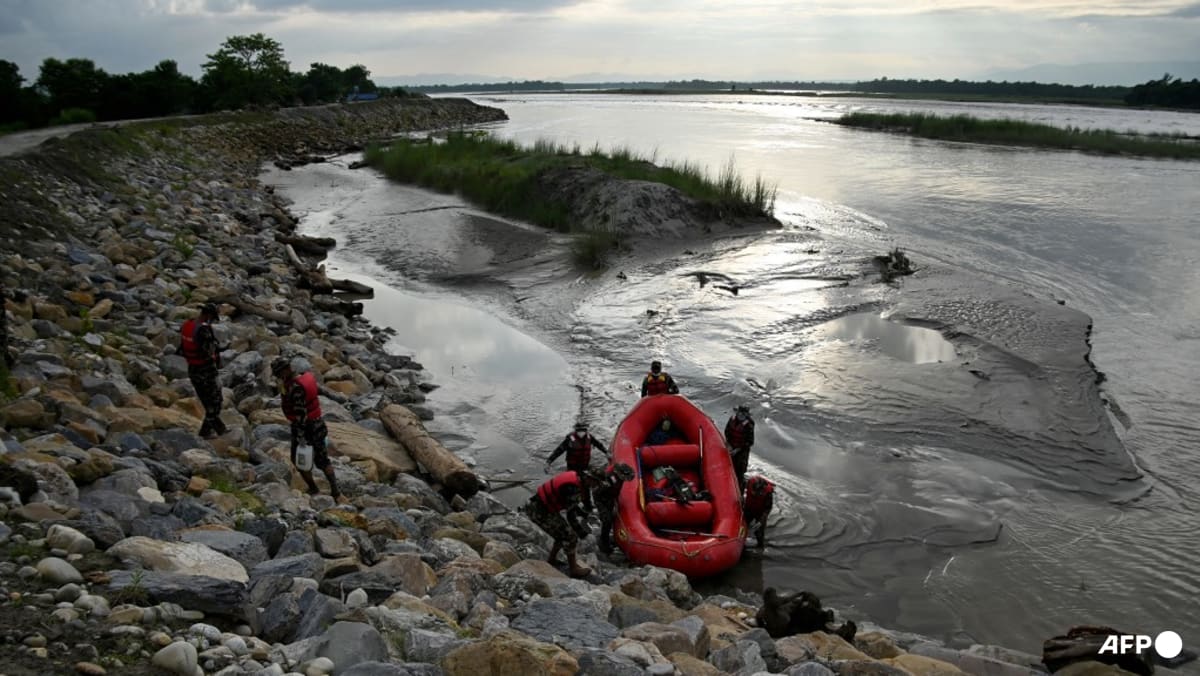
Khanal also called for forensic testing kits to identify corpses and freezer units to store them, saying bodies that have been in water could decompose at a faster rate.
The minister has highlighted the inequity that Nepal should suffer the extreme impacts of climate change when it has one of the world’s lowest per-capita carbon emissions.
That is due to its location in the Himalayas, the world’s highest mountain range, where glaciers are melting at a rapid speed as the planet heats.
Nepal’s Prime Minister Balendra Shah said in a social media post on Sunday that the country is facing an “unimaginable and heartbreaking” disaster.
“The devastating floods in the Bhote Koshi River in Rasuwa have made it extremely difficult to collect a complete account of the loss of life, property, and infrastructure,” he added.
“Although this task remains challenging due to adverse weather, difficult terrain, and ongoing risks, we are moving forward with determination to protect the lives of the citizens.”
Shah, a 36-year-old rapper-turned-politician widely known as “Balen” who was elected in March, faces the enormous task of rebuilding communities and critical infrastructure.
In Tibet, which is largely inaccessible to foreign journalists and where Chinese authorities are the only source of information, a total of 2,141 personnel have joined search and rescue operations.
In an illustration of the difficulties of access, Chinese rescuers seeking to establish a route to the Tibet epicentre of the disaster, Gyirong Port, advanced only 285m on Sunday.
They have another 1.25km to go before reaching the site, the state-run Xinhua news agency reported.

