


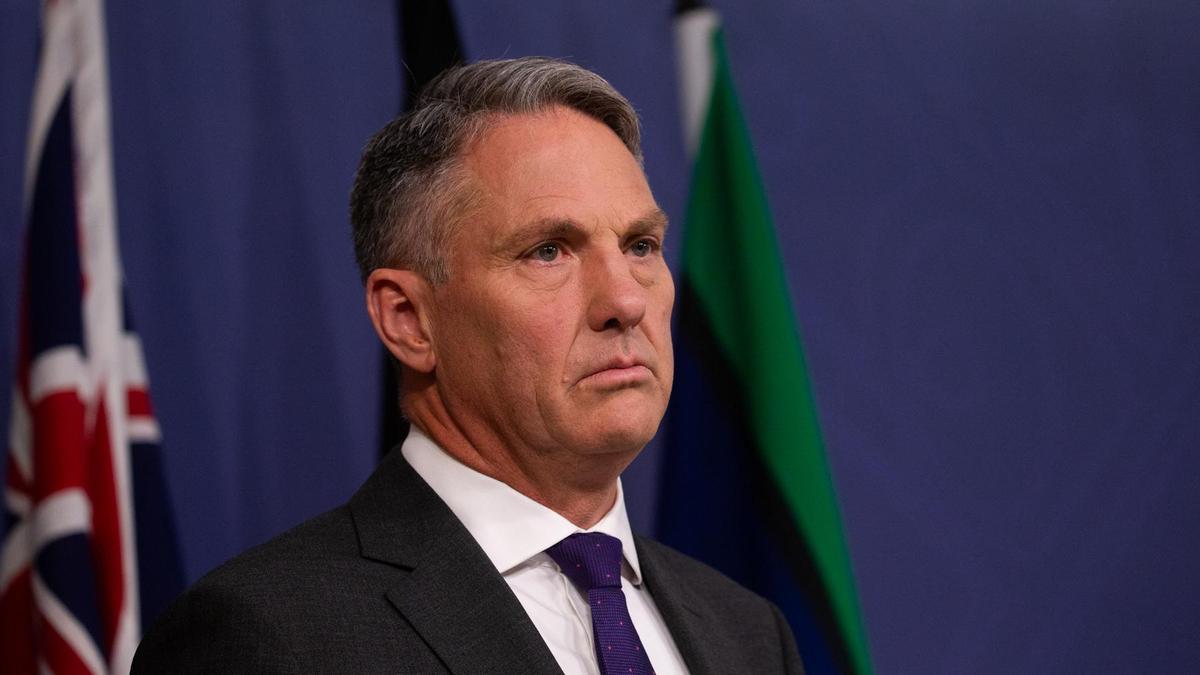
Richard Marles has refused to comment on the role dissatisfaction with Donald Trump played in the stunning loss for the Republican party in the midterms this week.
In an appearance on ABC News Breakfast on Friday, the Deputy Prime Minister said the outcome would not impact the alliance between the two countries.
When asked what he believed the lessons Australia could learn from the election results, Mr Marles said cost-of-living was a factor in every election.
“Cost of living is being experienced in, and challenges in respect to cost of living, are being experienced in North America, as they are in Europe, and so we’re obviously mindful of that,” he said.
“From our perspective, we are focused on what we can contribute to that, and that’s the management of our own budget, which we do in a very prudent way, and also making sure we are putting in place cost-of-living measures where we can.
“But we obviously understand that Australians are doing it tough in relation to this as well.”
Speaking from Geelong, Mr Marles said issues around data centres and big tech were growing in Australia, much like the US.

“What we are very mindful about here is that you’ve gotta get the social licence right in respect of data centres; where they’re built — and the place where they shouldn’t be built is in suburbs — and also making sure that the right power and the right water is brought to these data centres, that companies building them are bringing the power and water to supply them.”
The Deputy Prime Minister said it did not matter who was in the White House, nor who was in government in Australia, the alliance between the two countries remained as “critical” as ever.
After being pushed by host James Glenday on why senior ministers in the government declined to criticise Mr Trump, Mr Marles said managing the relationship was the priority.
“When you look at our strategic settings, when you look at how we manage the defence of this country, the alliance is very central to that, and we live in a very challenging strategic environment, and it is our job to manage that, irrespective of whoever is in the White House, and to try and build the best possible relationship we can with the American Government, and that’s what we’ve been doing,” he said.
It comes after the US scrapped plans to livestream the execution of Nidal Hasan across the world, which was widely criticised in Australia.
Mr Marles said the government opposed the death penalty and made that stance “completely clear”.
Alongside other national interests, he added that Australia’s stance on the war in Iran had been outlined.
“We really do need to see a return to normality in terms of the global fuel supply chain, and what that means is that the Strait of Hormuz needs to be open and there needs to be freedom of navigation there,” he said.
“Of course, Iran is the country which is seeking to prevent that, and that is utterly unacceptable.”
Mr Marles said having oil and fuel supplies operating normally would take pressure off the global economy.
“We’ve had our own interest rates decision this week, but we’re seeing interest rates go up in countries around the world,” he said.
“And the sooner we get to some normality in terms of global fuel supply chains, the better for the global economy, and that will be better for the Australian economy.”

