


Saskatoon city councillors voted against a motion on Wednesday to scrap a funding stream for an art installation that has stirred controversy over the past few weeks.

The funding stream, known as the Civic Capital Project Public Art Funding Stream, requires capital projects receiving over $5 million in city funding to incorporate a “public art or artistic design element” in the project for up to one per cent of the total project’s costs, with a maximum of $500,000.
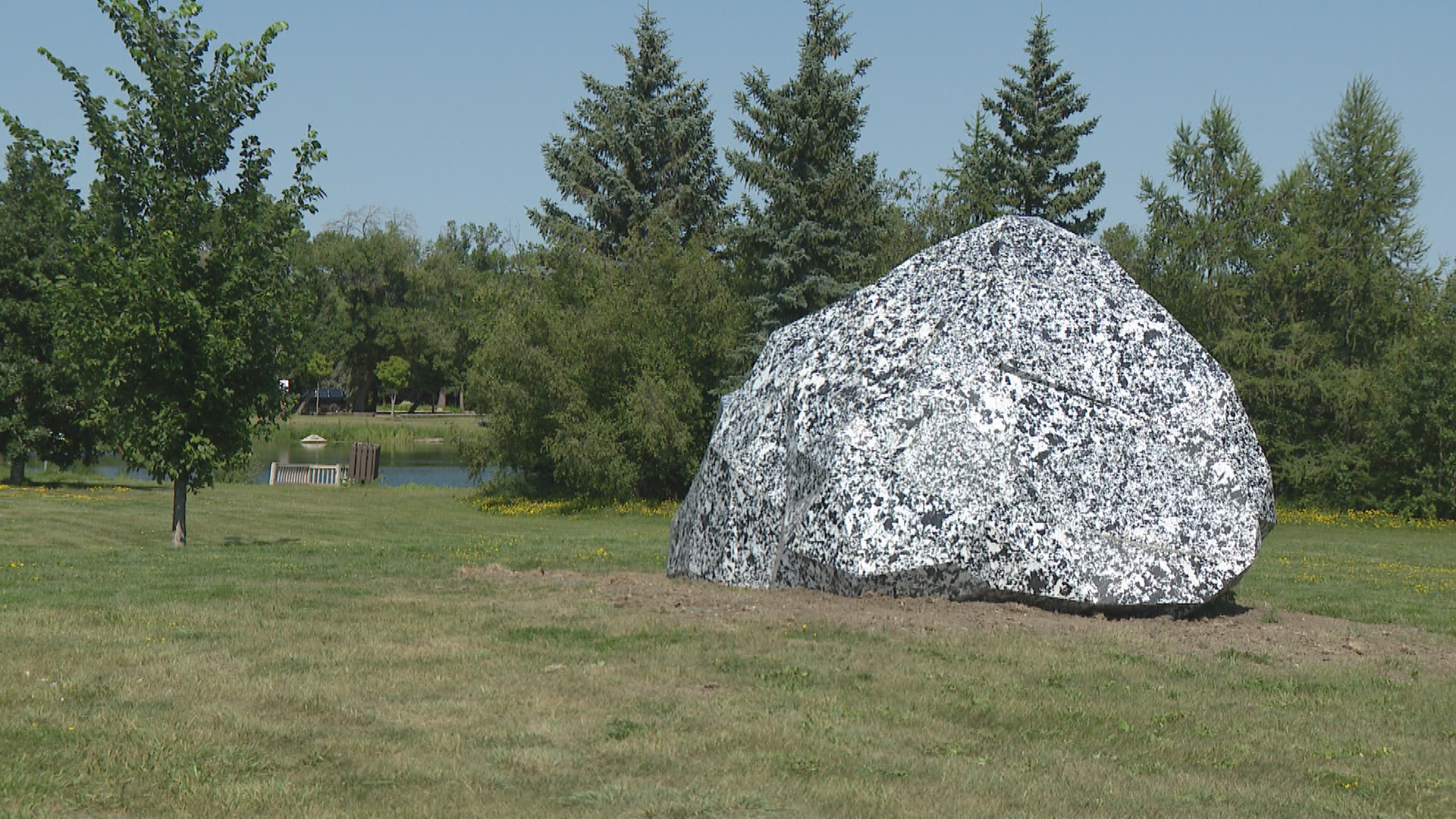
Ward 5 Coun. Randy Donauer brought forward a motion to scrap the policy following the controversial unveiling in June of three glacier-like sculptures placed throughout the city, made of recycled plastics and priced at $297,000.
But councillors voted 8-3 against his motion, with councillors Bev Dubois and Troy Davies in support, alongside Donauer.
In the weeks that followed, residents took to social media to share their thoughts on the project, with many scrutinizing the costs while others voiced support.
On Wednesday, support for the project, titled Modern Erratics, was on full display, with a dozen speakers voicing support for keeping the art project funding intact, fearing cuts could lead to future funding rollbacks.
“Public art isn’t separate from infrastructure. It’s one of the ways we create public spaces that people recognize, remember, and feel connected to,” Em Ironstar, executive director for the Saskatchewan Arts Alliance, said to councillors.

Get daily National news
Get daily Canada news delivered to your inbox so you’ll never miss the day’s top stories.
Tristan Surtees, one of the two artists behind the project and part of the Calgary-based art duo Sans Facon, appeared virtually before the committee on Wednesday, saying the project was not done with profit in mind but with a focus on community impact.
“It’s not off the shelf, it takes craftspeople and expertise to make work that can be enjoyed for many years and to have the durability in life required to exist in public space,” said Surtees.
The project costs included $150,000 for materials, with $148,000 for actually putting the work together, said Surtees, adding the total profit from the project was around $11,000 over three years.
In a report to councillors, city administrators provided details on the sources of the total project costs for the Material Recovery Centre (MRC), which included borrowing, city reserves and a federal-provincial funding program allocated to fund the art installations.
But Donauer says the intention of his motion was to address the policy, which is one of six ways public art is funded, especially as larger capital projects are expected to come online in the future.
“We’ve got some really large capital projects coming and so we’ll be looking at half a million dollars for public art on a regular basis if this continues,” Donauer said.
Donauer says that operational and reserve funding account for significant portions of arts and culture funding in the city, with operational funding making up around $10 million a year and grant funding over $800,000 a year.
“I’m sorry, but at some point we have to say how much is enough,” he said.
Modern Erratics uses discarded plastic from Saskatchewan to form glacier-like rocks. The three installations can be found at the city’s Forestry Farm Park, Diefenbaker Park, and Material Recovery Centre and feature recycled goods ranging from grain bags and bottle caps to shredded waste carts.
The project was three years in the making, commissioned as part of a site-specific funding stream within the city’s public art policy for the MRC. It was approved by the city council in May 2022, with a request for proposals issued later that year requiring that the art incorporate reused or recycled materials to reflect environmental sustainability and waste reduction.
City council awarded the project to Calgary-based art duo Sans Facon in January 2023 after a “fairly good” response, receiving around 10 submissions, said Lesley Anderson, Saskatoon’s director of planning and development.
The final price tag of Modern Erratics totalled around 0.8 per cent of the MRC’s project budget, which is below the maximum one per cent total art allocation, Anderson told councillors Wednesday.
Councillors also pushed forward motions to have city administrators report back on ways to improve the debated public art funding stream, including enhancing communication around how projects are procured and funded.
© 2026 Global News, a division of Corus Entertainment Inc.

