


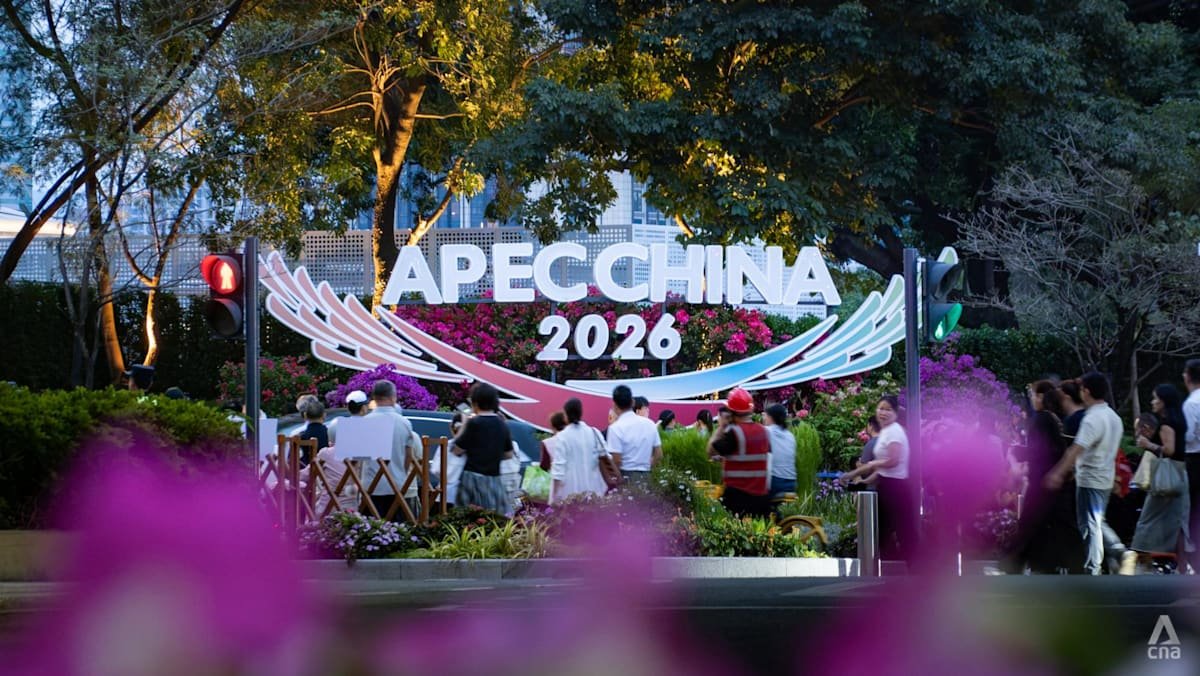
China wants to use the summit to burnish its image on the global stage, analysts said.
“(Beijing) wants to project an image of a responsible, stable great power,” Lim Tai Wei, an East Asian affairs observer and professor at Japan’s Soka University, told CNA.
“This will be an opportunity, a coming-out party for China.”
Washington’s priorities lie elsewhere.
Chief among them is ensuring China follows through on its existing trade commitments, particularly purchases of American agricultural goods, said Dexter Tiff Roberts, a non-resident senior fellow at the Global China Hub of US think-tank Atlantic Council.
After Trump and Xi met in Beijing in May, the White House said China had committed to buying at least US$17 billion of American farm goods a year, on top of soybeans. In September, the two sides agreed to cut tariffs on US$30 billion of each other’s goods, without setting a timeline.
China bought US$7.2 billion of non-soybean US farm goods between January and September, according to a Reuters analysis, raising doubts about whether it can meet its purchasing commitment.
China’s commerce ministry said on Nov 5 that it was open to buying more US farm goods, but only if tariff cuts are implemented.

