


However, Thailand has a substantial trade deficit with China.
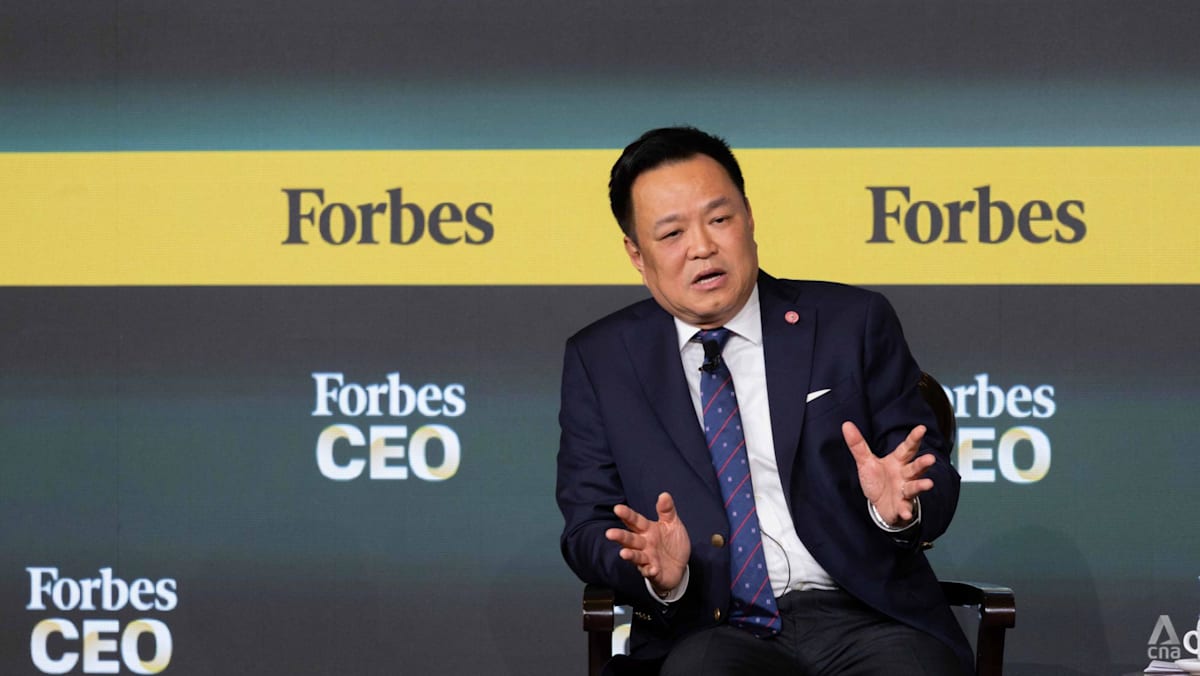
When asked by Forbes about this, Anutin said he was “sure that the level of deficit with China will greatly, greatly reduce with time” due to Chinese investments flowing into his country.
Thailand’s trade deficit with China has widened by 59.3 per cent in the first seven months of this year, amounting to US$55.13 billion, Thai news outlet The Nation reported in September.
Anutin said Thailand has had “numerous projects from China as direct investment” since the beginning of this year.
He also met with automobile players during his visit to China in July, “where they confirmed their investments into our country”, said Anutin.
Making a case for investing in Thailand, Anutin said that after taking office in September 2025, he, together with Foreign Minister Sihasak Phuangketkeow, vowed to put Thailand on the “radar” to bring in more innovative businesses.
In discussions with foreign investors, he “begged” them not to see Thailand as a country of “cheap labour supply, cheap facilities, cheap utility charges”, but as a place with developed logistics and communications systems, and a distribution hub for ASEAN and beyond, he said.
He was able to meet foreign dignitaries through the ASEAN and APEC summits, and a ceasefire agreement signed with Cambodia last October in the presence of Trump and Malaysia Prime Minister Anwar Ibrahim in Kuala Lumpur meant “we are in the focus of (the) media”, he said.

