


Western Australia’s multimillion-dollar poultry and agricultural industries are fearing the worst after testing confirmed a deadly strain of bird flu had breached the nation’s borders.
Concerns about the arrival of the highly contagious H5 variant — which has decimated wildlife populations and crippled farming sectors across Europe and America — turned into a grim reality on Saturday.
By Sunday evening authorities were handling 16 reports of unwell birds between Perth and Esperance.
Growing anxiety had already forced the Esperance Poultry Association to cancel its flagship annual show, originally scheduled for July 4, as panic gripped breeders and chicken owners.
Association president Gavin Millard said the threat of a rapid, inland spread had forced their hand.
“I had spoken with other members of the poultry club and everyone agreed we needed to shut things down and isolate,” he said.
“Unfortunately, that means cancelling our annual show, but the safety of people’s flocks has to come first. We do this because we love our birds, and we have to do everything we can to keep them safe.
“It’s simply not worth the risk. We are better off remaining isolated and doing everything we can to keep our birds safe.”
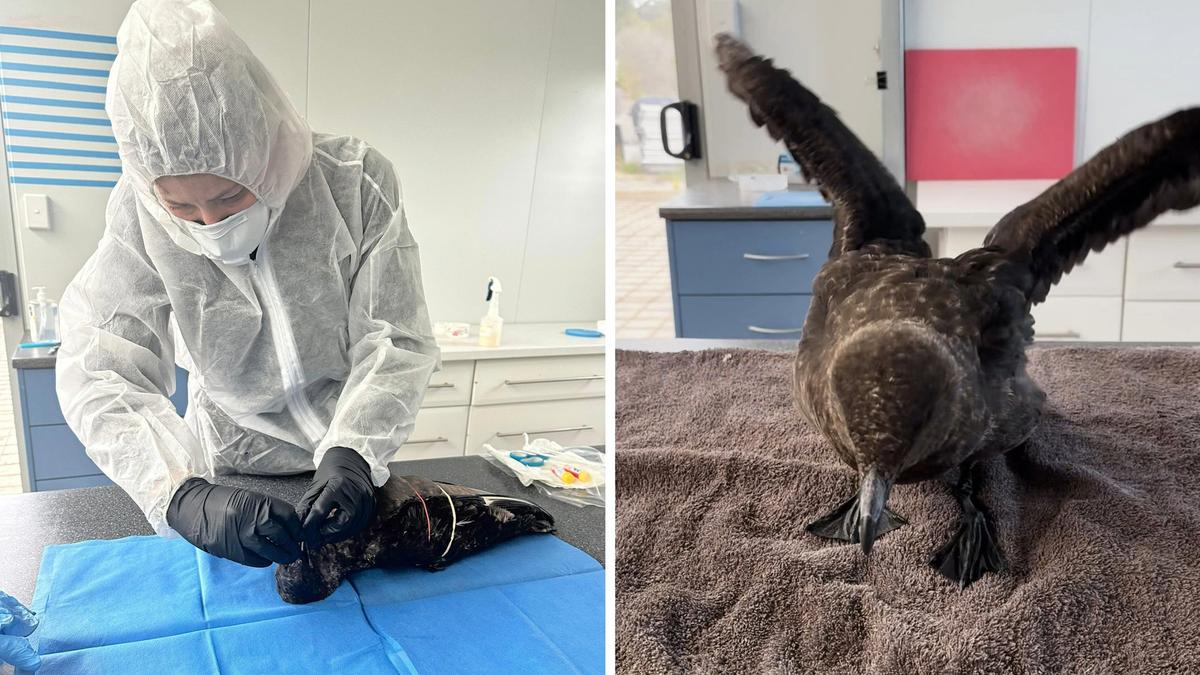
Esperance became ground zero for bird flu in Australia when on Friday Federal Minister for Agriculture Julie Collins confirmed a brown skua was found unwell at Cape Le Grand National Park.

The seabird died and testing determined the case as the H5 avian influenza virus on Saturday.
A second bird — a giant petrel found on a nearby beach — has also tested positive in initial screenings. The CSIRO is rushing to complete definitive testing, but that bird has also since died.
Mr Millard warned an outbreak would be disastrous.
“If the disease spreads, poultry owners would be devastated. Some people have spent decades breeding and caring for their birds,” he said.
“Those who keep heritage breeds invest a huge amount of time, effort and money into improving their bloodlines and maintaining quality stock.
“Losing those birds would be heartbreaking, and that’s exactly what we’re trying to avoid. We’re trying to avoid a situation where culling becomes necessary, whether in backyard flocks or commercial operations.”
Mr Millard is urging all poultry owners living in Esperance to remain vigilant.
“Many poultry owners are located closer to the coast, Esperance is a coastal town and there is significant bird movement along the coastline,” he said.
“If the virus is present, the coast is where we are most likely to see it, so it’s something we need to watch very closely.
“It is highly infectious. That’s the part that worries people . . . the best thing they can do is keep native bird species away from their flocks as much as possible. That may mean keeping birds confined to their pens for a while.”
Industry veterans warn that the consumer fallout from a full-blown outbreak could be catastrophic. It would likely plunge WA into severe food shortages and send grocery prices rocketing.
Lynn Kennedy, who operated Kennedy Free Range Chickens for 40 years before closing earlier this year, had recently sent 500 of her birds down to Esperance.
She warned that under strict biosecurity protocols, a single positive case triggers total euthanasia of a flock.
“That’s going to wipe out all of those birds that were producing eggs,” she said.
“Then there’s going to be the flow-on effect where there’ll be a huge shortage of eggs. It’s like everything, when there’s a shortage of anything, the price goes up.”
She also warned this could happen to the price of chicken.
“If it got into the meat industry and they had to euthanise those birds, then there’s going to be a lack of chicken,” she said.
“Chicken is one of the highest-consumed food products we have. There won’t be the chicken available, so people will have to find something else to use instead. Whatever is available would probably go up in price as well.”
Ms Kennedy explained the process of recovering a flock of chickens is extremely lengthy.
“A bird can only lay one egg a day, so there’s a limit there. They’d have to get the eggs from somewhere, and it takes three weeks before the birds hatch. Half of those will be roosters, which aren’t much good for laying eggs. Then it would take at least 20 weeks for those birds to be producing eggs. That’s about six months before production can recover,” she said.
“I do feel for the people who have to worry about this because it’s their whole livelihood. They may get some money to replace their birds, but then they’ve got that waiting time until those birds are in production again.”
Minister Reece Whitby insisted WA has been preparing for this scenario for years, with millions of dollars poured into cross-jurisdictional contingency plans.
“This is a real concern,” Minister Whitby said.
“We’re very concerned about our native wildlife and, of course, livestock industries as well. It has to be taken seriously.
“I don’t know the details of the arrangements, but I do know when I was Environment Minister, this issue was front of mind a number of years ago.
“There’s been planning done between the States and the Federal government. There’s been investment of millions of dollars in preparation, and I know that there is an arrangement in terms of the response, which is now being played out.”
However, Opposition Leader Basil Zempilas wasted no time turning up the political heat on the Cook Government, demanding absolute transparency as farmers stare down the barrel of financial ruin.
“Clearly this is a time for heightened concern,” Mr Zempilas said.
“Our poultry farmers, those in poultry production, this is their livelihoods on the line.
“It’s very important that there’s full disclosure, that all of the information keeps coming, that nothing is held back . . . Our agricultural regions, our wildlife, and in particular those in poultry production, they are rightly nervous now.”
Biosecurity officials are urging anyone who spots unusual wildlife deaths along the south coast to contact the emergency animal disease hotline immediately.

