


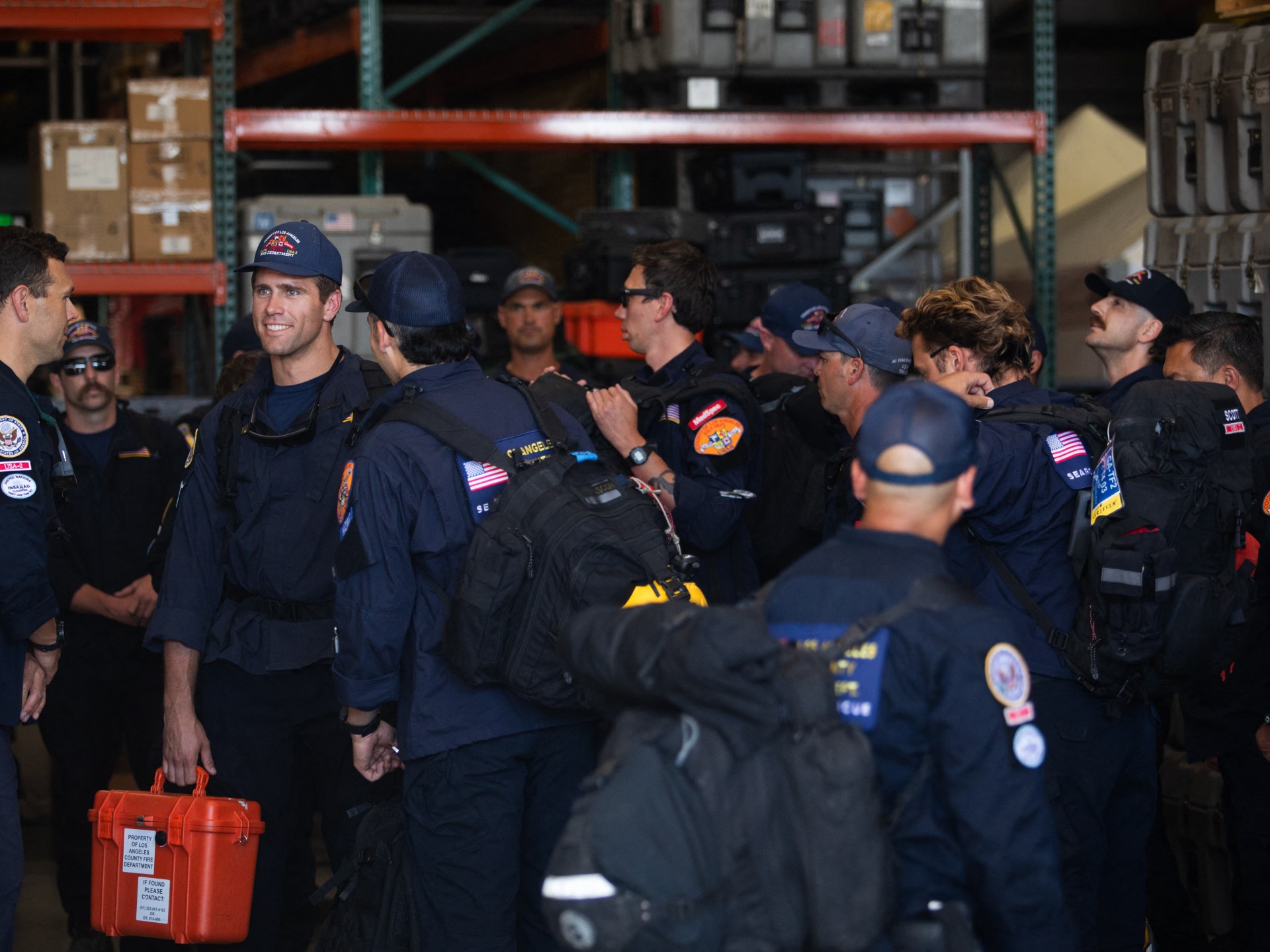
After two devastating earthquakes on Wednesday roiled Venezuela, causing deaths and destruction, rescue efforts and humanitarian aid have been dispatched from all over the world.
Countries from across the Americas – including Brazil, Canada, Mexico, Colombia, El Salvador, Cuba and the United States – as well as the United Nations, were sending search and rescue teams and humanitarian aid in the aftermath of the quakes. Authorities have raised their estimate of the death toll to 235 people.
“To the Venezuelan people, to those whose loved ones are under the rubble, know that we are determined that help gets to you,” said the United Nations’ aid chief, Tom Fletcher.
UN-certified rescuers will help search for survivors, Venezuela’s acting President Delcy Rodriguez said in a televised message.
How much damage have the earthquakes in Venezuela caused?
A magnitude 7.2 earthquake struck about 160km (100 miles) west of Caracas, followed less than a minute later by a magnitude 7.5 tremor, the strongest since 1900, according to the US Geological Survey (USGS).
Authorities said on Friday that 235 people were confirmed to have been killed, with 4,300 more injured.
Jorge Rodriguez, head of Venezuela’s national assembly and brother of interim President Delcy Rodriguez, said that 200 people had been trapped, with 250 buildings damaged or destroyed nationwide.
“Venezuela was already in a very difficult situation” before the quakes, with frequent power outages and public services in “shambles”, said Al Jazeera’s Alessandro Rampietti, reporting from Bogota in neighbouring Colombia.
“Many hospitals were already operating under capacity… They simply don’t have all of the engineers and doctors that are needed.”

Which countries in the Americas are assisting Venezuela?
Leaders in the Americas have announced that they are providing support to Venezuela.
The United States
The US, which in January carried out a military operation culminating in the abduction of Venezuela’s President Nicolas Maduro, has pledged what it called a “whole-of-government response”, which includes plans to deploy warships, transport planes and helicopters, as well as to mobilise $150m in aid.
US Secretary of State Marco Rubio said the response would be “big… fast and… effective”.
Brazil
Brazilian President Luiz Inacio Lula da Silva announced the dispatch of a field hospital, as well as dozens of firefighters and other support personnel.
“We will send Friday morning a humanitarian search and urban rescue mission in a KC-390 plane,” Lula said on X, adding 36 firefighters and eight other specialists on risk assessment and telecommunications will be on board. “With them, we are sending nine tonnes of equipment to help.”
“On Saturday, we will send another flight with equipment to assemble an open hospital, 100 water purifiers moved by solar panels, medication and medical supplies for surgeries,” the Brazilian president added.
El Salvador
El Salvador’s President Nayib Bukele said he had readied 300 rescuers and paramedics, and 50 tonnes of equipment, medicines and basic supplies.
Cuba
Cuban health workers were already “fully mobilised and providing medical services to the affected population”, said Havana’s Foreign Minister Bruno Rodriguez.
Mexico
Mexican President Claudia Sheinbaum said her country was dispatching a military team of rescuers and medical personnel and would send further assistance if necessary.
Colombia
Colombia, which also felt the quakes, will send more than 60 rescuers and 12 tonnes of humanitarian aid to its neighbour, its disaster management agency said.
Which other countries and organisations are providing support?
IFRC
The International Federation of Red Cross and Red Crescent Societies (IFRC) said it had released $2.5m to support recovery efforts.
The Vatican
Pope Leo XIV has sent “initial” emergency aid of 100,000 euros ($114,000), the Vatican announced.
Turkiye
Turkiye said a 67-strong team of search and rescue experts, medics and aid workers was due to leave Istanbul on Friday morning.
Spain
Prime Minister Pedro Sanchez said he told the Venezuelan president on Thursday that Spain was sending a plane later that day with two government-sponsored search and rescue teams, along with other aid workers, to assess needs on the ground.
“Our government is working to give all the possible assistance to our Spanish expatriates in Venezuela [too],” Sanchez said on his social media channels.
Germany
Germany has promised six military transport planes.
Switzerland
Switzerland has mobilised 80 personnel, rescue dogs and 18 tonnes of equipment to be sent as soon as possible.
France
French President Emmanuel Macron took to social media platform X to express France’s solidarity with the Venezuelan people and said that a team of 85 French rescue workers specialising in search and clearance operations is “being deployed immediately” to Venezuela.
“France stands ready, alongside its European partners, to provide assistance to the affected populations in response to the needs identified by the Venezuelan authorities,” he wrote.
The Netherlands
The Netherlands has announced a 2 million-euro ($2.28m) aid package to fund a search and rescue team.
Czech Republic
The Czech Republic said it had assembled a team and was preparing to fly it in.
India
India has sent two Indian Air Force aircraft carrying a 41-member medical team including critical care specialists, trauma management specialists and surgeons along with 35 tonnes of urgent supplies including a modular field hospital and medical equipment.
China
China said on Friday that the government and the Red Cross Society of China will provide emergency humanitarian aid, as well as a rescue team and medical relief.
Why is this significant?
“There’s no doubt that this international effort to help Venezuela from across the Americas will be crucial in trying not only to save people but also help with the needs of the many people who have been injured,” Al Jazeera’s Rampietti reported.
Rescue efforts have been difficult for Venezuela, which is grappling with the economic costs of the earthquake. The country has long been subject to heavy sanctions from the US and other Western countries, making it difficult for aid organisations to send funds or pay workers through banks.
While some sanctions have been lifted since the US abducted Maduro in a military strike on Caracas in January – and he was replaced by Rodriguez – Caracas is still grappling with the effects of decades of underinvestment.
Adding to this, initial assessments released on Thursday put the estimated economic damage at between 1 and 7 percent of Venezuela’s $111bn gross domestic product (GDP).

