


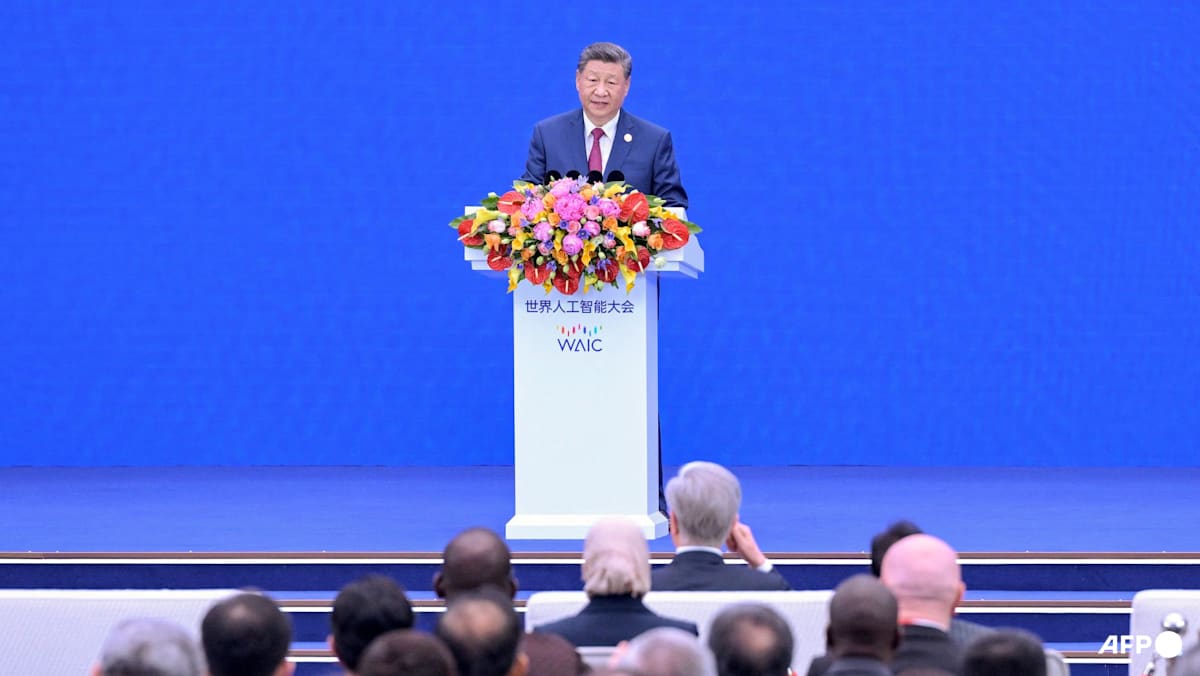
A day before Xi’s speech, China launched the World Artificial Intelligence Cooperation Organization (WAICO) in Shanghai, comprising 29 member countries.
State news agency Xinhua described WAICO as an independent intergovernmental organisation, committed to promoting international cooperation and global governance in AI under the principles of the UN Charter.
Members include countries across Africa, Central and Southeast Asia, the Middle East, Latin America and Eastern Europe, including Indonesia, Malaysia, Pakistan, Kazakhstan, Kenya, South Africa, Brazil and Russia.
“The signatory list represents a significant segment of the Global South that is no longer content to be a mere consumer of standards set in San Francisco or Brussels,” said HKU’s Wong, adding that the absence of Western nations reflects a “growing bifurcation” of the AI landscape.
For member states, the appeal is less ideological than economic, analysts said.
Wong estimated that Chinese AI products and infrastructure are “at least four to five times cheaper than their US counterparts”. This makes diversifying suppliers a luxury that many developing economies can ill afford, he added.
“To opt strictly for Western solutions would be to consign one’s own population to a prolonged ‘AI lag’ that would inevitably calcify into a permanent historical injustice,” Wong said, adding that WAICO’s launch has widened the US-China contest into a race for partners.

