


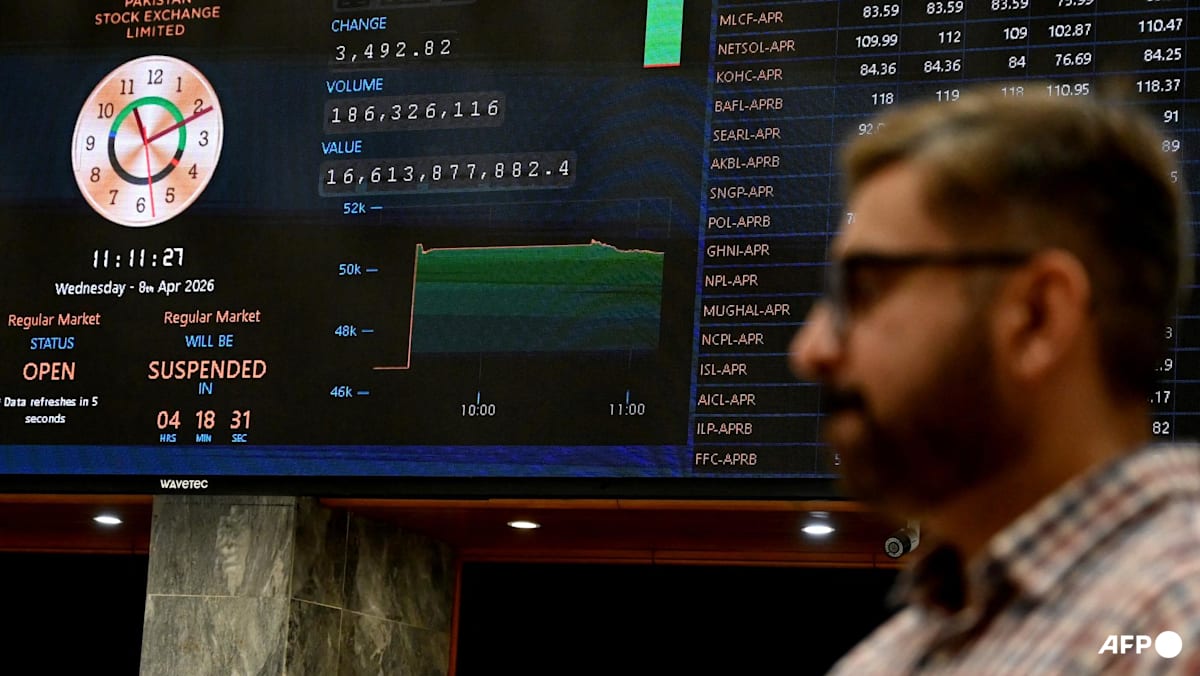
Pakistan’s benchmark index KSE-100 rose for two consecutive sessions after the US midterms before falling 0.85 per cent on Nov 6 as oil prices climbed and investors sold shares to cash in on earlier gains.
The index rose again on Tuesday after a long weekend as oil prices eased, but slipped the following day, highlighting the fragility of investor confidence.
Ghani said a sustained recovery would depend on concrete progress towards a ceasefire or de-escalation of the US-Iran conflict, rather than expectations alone.
For Pakistan, the benefits could extend beyond the stock market.
Ghani estimated that easing war-related pressures could reduce projected inflation by 1 to 1.5 percentage points.
JS Global raised its inflation forecast for the year ending June 2027 from 8.2 per cent to 9.8 per cent because of the conflict.
Ghani warned that even with lower energy prices, inflation was unlikely to return to Pakistan’s central bank target of 5 to 7 per cent anytime soon.
Mohammad Sohail, CEO of Pakistani investment firm Topline Securities, said rising oil and gas prices could slow economic growth, fuel inflation and affect interest rates and stock markets.
However, he believes Pakistan is better placed to withstand such shocks than in previous crises, thanks to an improved economic position.
The country’s foreign exchange reserves have risen to about US$26.8 billion, according to central bank data, while the government’s budget shortfall has narrowed to its lowest level in more than 20 years.
Still, much depends on what happens next in the Middle East.
Hopes of a diplomatic breakthrough are growing, with Trump meeting Qatar’s prime minister on Monday as efforts to end the war in Iran intensify.
But US and Gulf officials have cautioned that an agreement is far from certain, according to media reports.
“A sustained decline in oil prices and the reopening of the Strait of Hormuz would be positive. But we still need to await the details of any US-Iran deal,” said Priyanka Kishore, a Singapore-based economist.

